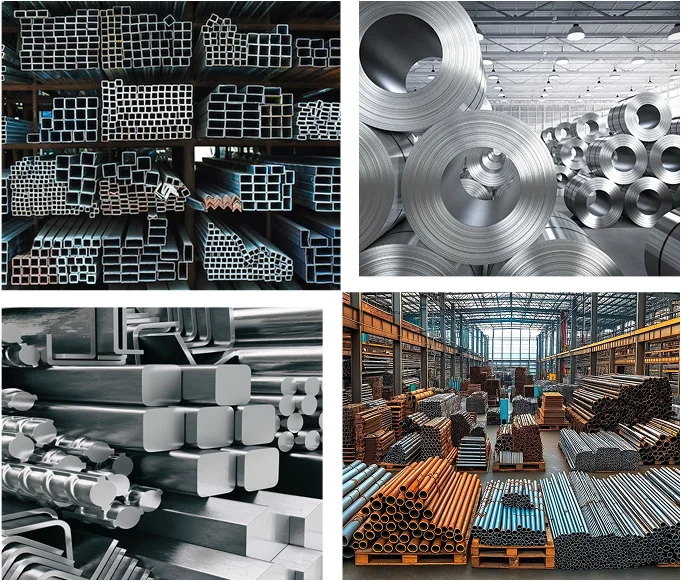
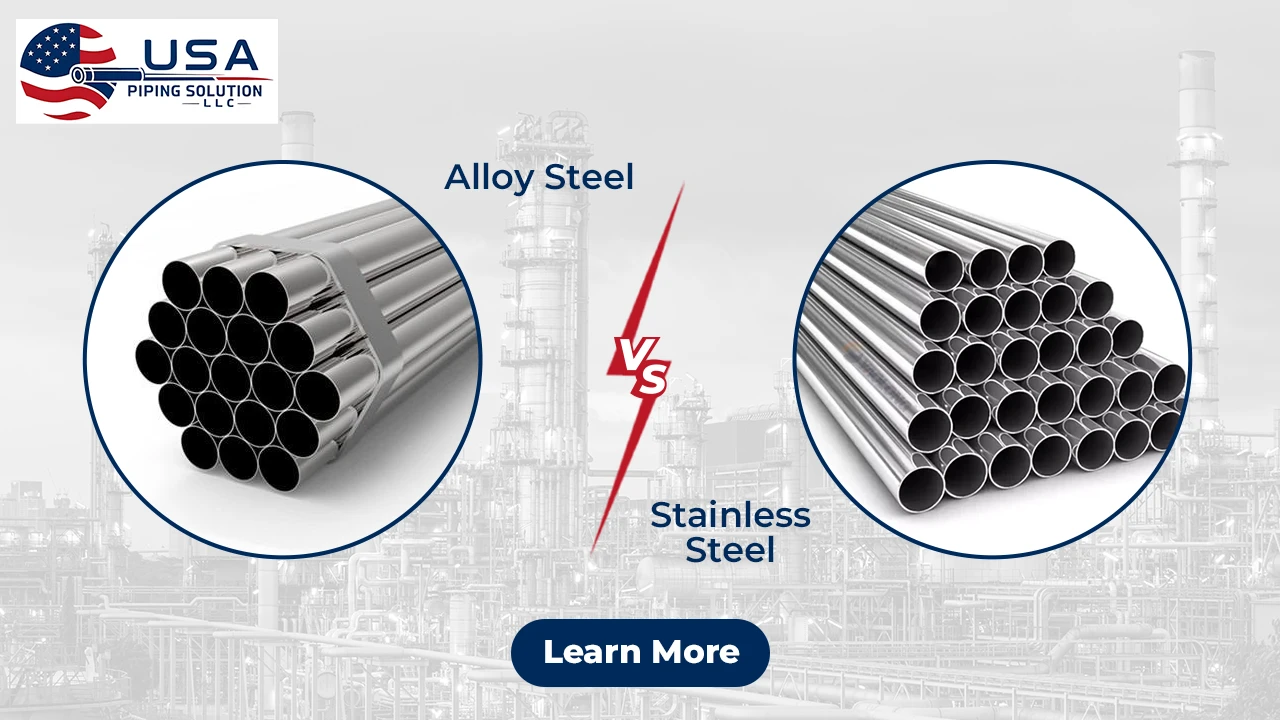
The decision between Alloy steel and stainless steel is usually the choice when it comes to the selection of the appropriate metal in the industries. The two materials are highly employed in various industries because they are very strong and durable. Alloy steel is reputed to be extremely strong and adjustable. Conversely, stainless steel is unique in that it has a high level of corrosion resistance and has a smooth look. Necessarily, therefore, to see the difference between these two metals is the key to the durability and affordability of your project. In this blog, we will explore their Alloy steel vs stainless steel detailed comparison by composition, stainless steel properties, and applications that help you to make an informed decision when choosing the right material for your project.
Understanding Alloy Steel
Alloy Steel is a type of steel that is made up of an amalgamation of iron and carbon, and other alloying metallic elements including manganese, nickel, chromium, molybdenum, vanadium and silicon. This addition is done in certain proportions so that it improves the mechanical properties of the material rendering it stronger, tougher and more durable than ordinary carbon steel. The greatest strength of Alloy Steel is in its versatility; engineers can alter its composition to meet the preferred performance attributes for various industrial applications. With the alloy content, the manufacturers are able to make steels that are more or less hard, wear-resistant, or have tensile strength according to the needs of the operation. This will allow Alloy steel to become a critical material in every industry, such as the construction industry, automobiles, oil and gas, and power industries.
Common Applications Use of Alloy Steel
Alloy steel is treasured in various sectors due to its superior strength, durability, and versatility. It is a demanding material that is favored due to its high pressure, stress, and temperature resistance.
- Automotive Industry: The gears, axles, crankshafts, etc., used in the auto industry are characterized by high strength and fatigue resistance.
- Construction Equipment: These are used with ideal construction components in heavy machinery and structures that need durability and elasticity.
- Oil & Gas Sector: It is used in pressure vessels, pipelines and drilling equipment because it is resistant to corrosion and heat.
- Power Generation: It is commonly applied in the turbines, fasteners, and high-stress elements where long-term performance and durability are paramount.
Understanding Stainless Steel
Stainless steel is a highly resistant and corrosion-resistant alloy that consists of a minimum of 10.5 percent chromium, which creates a thin layer of self-healing oxide that protects it against rust and oxidation. This distinctive feature, together with its strength, makes it great in both utilitarian and decorative use. It is characterized by good tensile strength, glossy and appealing surface finish, as well as high performance at extreme temperatures. In addition, stainless steel is simple to wash, keep, and fully recyclable, and therefore is environmentally friendly. These superior attributes have made stainless steel extensively utilized in other industries like building, food processing, medical, and architecture, where sanitation, durability, and appeal are of equal significance.
Common Applications Use of Stainless Steel
The stainless steel is widely used in industries due to its high measures of resistance towards corrosion, hygienic nature and aesthetics. Its strong performance, ability to perform at harsh conditions and its flexibility make it indispensable in many modern uses.
- Food Processing Industry: Stainless steel is employed in the production of food equipment, tanks, and utensils as it is non-reactive, easy to clean, and maintains hygienic conditions.
- Medical Sector: Most of the hospital needs surgical equipment, implants, and hospital equipment that are biocompatible; all the equipment is easily made with stainless steel.
- Architecture & Construction: Applied to the facade, rails, and ornaments to provide their smooth look and longevity.
- Marine Chemical Industries: The marine industry is ideal in circumstances where moisture and chemicals are present, and therefore, it is resistant to corrosion.
Aerospace & Transportation: They are used in aircraft parts, exhaust systems, and in automotive trims because they are stronger-to-weight and long-lasting.
Comparison Between Alloy Steel vs Stainless Steel
|
Category |
Alloy Steel |
Stainless Steel |
|---|---|---|
|
Types |
Low-Alloy Steel, High-Alloy Steel, Tool Steel, Maraging Steel |
Austenitic, Ferritic, Martensitic, Duplex |
|
Chemical Composition |
Iron alloyed with carbon, chromium, molybdenum, nickel, vanadium, and manganese (varies by grade). |
Iron alloy contains at least 10.5% chromium, with additions of nickel, manganese, silicon, and small carbon content. |
|
Mechanical Properties |
High tensile strength (up to 960 MPa); excellent hardness; good wear resistance; can be heat-treated for enhanced strength. |
Moderate tensile strength (around 621 MPa); strong, tough, and ductile; retains performance under extreme temperatures. |
|
Physical Properties |
High strength-to-weight ratio; durable; wear- and heat-resistant; suitable for high-stress applications. |
Outstanding corrosion and oxidation resistance; non-magnetic (in most grades); easy to clean and maintain; attractive surface finish. |
|
Thermal Conductivity |
Approximately 45 W/(m·K) |
Approximately 15 W/(m·K) |
|
Corrosion Resistance |
Good, depending on alloy content, but lower than stainless steel. |
Excellent — resists rust, staining, acids, and bases. |
|
Heat Resistance |
Maintains hardness and strength at elevated temperatures. |
Performs exceptionally well under both high and low temperatures. |
|
Electrical Conductivity |
Moderate |
Lower compared to alloy steel. |
Advantages of Alloy Steel Compared to Stainless Steel
The following are the main advantages of using alloy steel as compared to stainless steel:
- Alloy steel has superior wear and abrasion.
- Welding is also not as difficult as stainless steel because, during welding, one needs to be more precise and in control.
- Most stainless steel grades are more difficult to machine and costlier than alloy steel.
- It offers high toughness and durability for arduous use.
Disadvantages of Alloy Steel Compared to Stainless Steel
The shortcomings of alloy steel in contrast to stainless steel are listed below:
- Alloy steel is not as resistant to corrosion as stainless steel. This leads to it being finished with protection after production.
- High temperatures have a low strength of alloy steel.
- Surface finish in alloy steel is not as good as that of stainless steel.
Choosing Between Alloy Steel and Stainless Steel
In choosing between Alloy Steel Vs Stainless Steel, the following are factors to be considered in making the best choice:
- Based on Environment
- Stainless Steel: It is the most suitable in corrosive or wet conditions because it does not rust or oxidize.
- Alloy Steel: Alloy steel is suitable in terms of dry, heavy-duty, or structural use where corrosion is not a significant consideration.
- Based on Strength
- Alloy Steel: It is stronger and tougher in nature, therefore, it can be used in harsh mechanical applications.
- Stainless Steel: This provides a very good balance and longevity, and resistance to corrosion.
- Based on Budget
- Alloy Steel: Less expensive and applicable when low cost is an issue.
- Stainless Steel: Stainless steel is used in premium or hygienic-based contexts such as food and medical sectors.
- Based on Maintenance
- Stainless Steel: It is a material with low maintenance and does not need additional coating.
- Alloy Steel: It requires different finishes and coating treatments to ensure long-lasting life use and avoid rust.
Conclusion
To sum up, the Alloy Steel vs Stainless Steel comparison shows that the two materials are good in various industrial practices. Alloy Steel is reputed to be very strong, durable and economical and that is why it is suitable in heavy-duty and structural works. Conversely, Stainless Steel has been described as having an excellent resistance to corrosion, a beautiful finish, and easy to maintain and is thus fit to be used in hygienic and aesthetic applications. By learning the critical alloy steel properties and stainless steel properties, you are able to formulate the correct choice of the material to use depending on the environmental factors, performance needs and long-term objectives and achieve the best outcome in your engineering or manufacturing project.
Need high-quality alloy or stainless steel components for your piping system? Contact USA Piping Solution today for expert material advice and reliable supply.
FAQ About Alloy Steel vs Stainless Steel
1. What is better, alloy steel or stainless steel?
It totally depends on the person's needs, but alloy steel is stronger and cheaper, on the other hand, stainless steel is better for corrosion and looks.
2. Is alloy steel rust proof?
No, the alloy steel is not fully rust-proof, but mixing different metals like chromium and nickel along provides improvement in resistance.
3. Which is expensive, alloy or stainless steel?
The stainless steel is commonly more expensive than the alloy steel because it has high chromium and nickel content.
4. Is alloy steel stronger than steel?
Yes, the alloy steel is stronger than regular carbon steel due to the composition of different elements.
Our Blog List
Application Industries
 Boilers
 Heat Exchangers
 Power Plants
 Steam Piping
 Refineries
Drop us a line
We respects customer privacy and ensures absolute confidentiality of any information that is given to us.