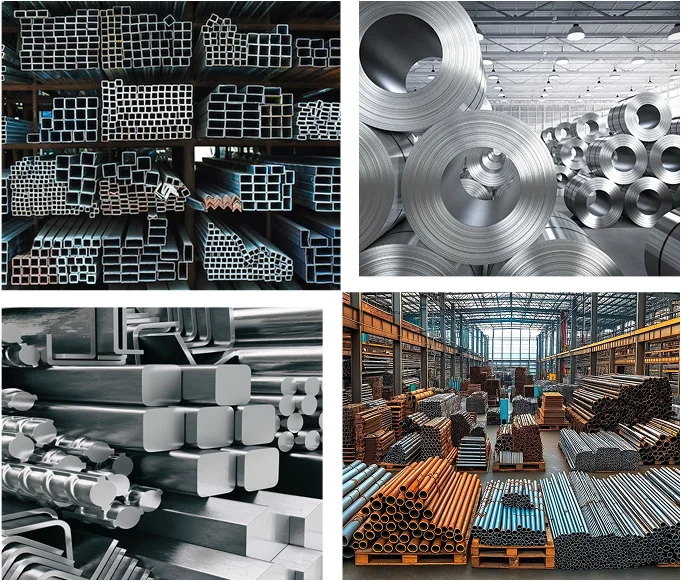
In the modern world, there is a wide variety of industries that use stainless steel. In addition to building and marine construction, this alloy is increasingly used in everyday household appliances, food processing, chemical plants and in auto parts. Stainless steel is generally more expensive in the initial purchase compared to mild steel; however, core stainless steel characteristics, including resistance to corrosion, strength, as well as limited maintenance, increase service life and lower the life-cycle cost. Most of the time, the first outlay is paid back in a reduction of replacements and downtime. This guide describes the meaning of stainless steel, necessary stainless steel characteristics, and typical grades of stainless steel types used in a variety of piping, fabrication, and industrial equipment.
What Is Stainless Steel?
Steel is primarily an alloy of iron and carbon (up to about 2.1% carbon).. Stainless steel refers to a form of steel that has been corrosion resistant by incorporating special alloying elements, with chromium being the main element. Stainless steel has approximately 200 grades which are strong, resistant to heat and have the capacity to withstand rust. The grade of carbon is normally between 0.03 and 1.2 percent. The stainless steel is unique in the fact that it contains chromium in at least 10.5%. When chromium mixes with air it forms a fine coating of protective oxide on the surface, which helps to prevent rust and keeps the metal surface clean and corrosion-free and in good condition.
Benefits of Stainless Steel
Stainless steel has provided credible service in industries for over a period of 70 years. New applications are being introduced every year as the stainless steel properties, such as corrosion resistance and durability, are gaining more and more recognition.
Increased demand has increased production, reducing prices and enhancing accessibility. Currently, standard, non-standard sizes in common stainless steel grades (304, 316, duplex, austenitic, ferritic) can be sourced easily based on the project requirements.
There is a great range of finishes. In addition to smooth finishes, there are available textured, patterned or coloured, finishes to suit architectural or process needs.
Stainless steel can be completely recycled. Scrap provides about half of the world production and it saves resources and promotes environmentally-friendly procurement.
Stainless Steel Types
At room temperature, stainless steel is categorized based on their microstructure, because the structure has a direct impact on the properties of stainless steel, such as strength, corrosion resistance, and formability.
- The most broad family of the stainless steel grades is austenitic, including Cr-Ni, Cr-Mn, Cr-Ni-Mo alloys and high-performance and high-temperature austenitics. It has good to excellent corrosion resistance, easy forming and reliable weldability. Cold working raises the strength. It can be used as 304 and 316 in process equipment, food contact surfaces, and architectural use.
- Ferritic stainless steel is a chromium-based alloy (generally referred to as Cr steels) containing minimal or zero nickel, a factor that contributes to maintaining the price at constant levels. It is useful in stress corrosion resistance in most environments and solid heat conduction. Common applications are automotive trim, home appliances and flue systems.
- Duplex stainless steel is an equal combination of ferrite and austenite- approximately 50/50 in phase. This family is characterized by high strength and high pitting and crevice attack and stress corrosion cracking resistance. It is commonly applied in chemical processing, offshore structures, pulp and paper as well as desalination plants.
- The last family but with high strength and wear resistance is martensitic stainless steel. Increased content of carbon enhances hardenability and certain grades are supplemented by nitrogen to provide additional strength. Types that are precipitation-hardened become stronger as a result of heat treatment whereby fine precipitates are formed in the microstructure. Typical uses are blades, turbine components, valves and high-strength shafts.
To understand stainless steel at its core, including its key alloying elements and how composition affects properties, read our detailed guide on Stainless Steel Composition: Everything You Need to Know.
Grades of Stainless Steel
There are hundreds of grades of stainless steel in the market today. Choosing the right one for your application is important as their properties can be quite different from each other.
The AISI (American Iron and Steel Institute) system for naming stainless steel is still used by the industry. The numbering system uses three-digit numbers starting with 2, 3, or 4.
200 Series
This series is used for austenitic grades that contain manganese. These chromium manganese steels have a low nickel content (below 5 per cent).
200 series find use in:
- Washing machines
- Cutlery
- Food & drinks equipment
- Automotive industry
- In-doors equipment, etc.
300 Series
This is a series of alloying elements of austenitic stainless steels that contain carbon, nickel, and molybdenum. Molybdenum addition enhances corrosion resistance in an acidic environment whereas nickel enhances ductility.
The most popular in this series are AISI 304 and 316. AISI 304 is also referred to as 18/8 steel because it has 18 percent chromium with 8 percent of nickel.
300 series stainless steel applications include:
- Food & beverage industry
- Automotive industry
- Structural for critical environments
- Medical instruments
- Jewellery, etc.
400 Series
Ferritic and martensitic alloys form this series of stainless steel. These grades are available for heat treating. Providing a good combination of strength and high wear resistance. The corrosion-resistance properties are lower than 300 series, though.
Applications for 400 series include:
- Agricultural equipment
- Motor shafts
- Gas turbine parts, etc
SAE grades
The SAE system of numbering uses a 1-letter + 5-digit UNS number code to designate stainless steel. The common AISI grade 304 has S30400 as its SAE designation. While most grades have a designation, newly developed exclusive grades may be named by their owners and not have any SAE code.
Stainless Steel Applications
Stainless steel is an all-purpose substance found in construction, transportation, manufacturing, energy, agriculture, and everyday appliances. It is a strong and durable material that is formable and corrosion resistant making it indispensable in contemporary projects. When you question yourself what is stainless steel, it is an alloy, composed of iron and chromium; its surface film is one of the reasons why it has done so well in so many other environments.
Where stainless steel is used most:
- Consumer products and appliances
- Oil and gas equipment
- Chemical processing equipment
- Food and beverage processing
What is the reason why these sectors depend on it? Stainless steel provides a hygienic surface and a good finish and low maintenance. It is also corrosion resistant and mechanically strong, which is used to reinforce other materials (such as rebar in concrete), which increases service life. Stainless steel is completely recyclable, and it does not lose its quality at the end of life, which contributes to sustainable material cycles.
Final Thoughts
Stainless steel can be used in decorative purposes or in heavy-duty applications. Being aware of the variations in the grades of stainless steel and the stainless steel properties can aid in long service life and safety being observed at a reasonable cost. When you say what is stainless steel, it is an alloyed steel made of chromium, which is used due to its strength and resistance to corrosion in all these applications.
Within the USA Piping Solutions Company, there is the supply of stainless pipe, tube, fittings, flanges, and valves with major stainless steel grades such as 304/304L, 316/316L, duplex, and specialty alloys. We have a mill-certified inventory that is fully traced and our shop will help in cutting, end prep, beveling, polishing as well as custom fabrication. Have a problem with finding the right combination of stainless steel with your service media? The correct grade of surface finish to use when being subjected to pressure, temperature and corrosion is recommended by our team, therefore your system will be longer running with fewer changeouts. Contact us today!
Our Blog List
Application Industries
 Boilers
 Heat Exchangers
 Power Plants
 Steam Piping
 Refineries
Drop us a line
We respects customer privacy and ensures absolute confidentiality of any information that is given to us.