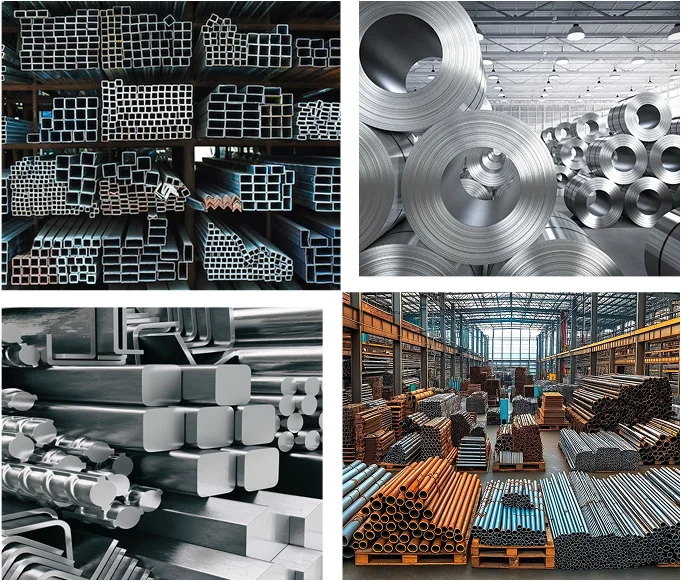
Choosing the right alloy steel seamless pipes is essential for efficiency, durability, and safety. Industries like oil & gas, power, chemical processing, and marine face changing pressures, temperatures, and chemical exposure. Pick the wrong grade and you risk premature wear, corrosion, and unplanned downtime. This guide from USA Piping Solution shows how to match the pipe grade to your operating conditions and code requirements, so you can choose confidently and control lifecycle cost.
What Are Alloy Steel Pipes?
Alloy steel pipes are carbon steels enhanced with elements such as chromium (Cr), molybdenum (Mo), nickel (Ni), vanadium (V), or niobium (Nb) to boost high-temperature strength, toughness, and oxidation/sulfidation resistance. In piping, they’re typically supplied as seamless for critical pressure/temperature service or welded for standard duty. Grades span low-alloy to high-alloy, with power and refinery workhorse specs drawn from ASTM A335 (P-grades) and boiler/HX tubing from ASTM A213 (T-grades).
For severe high-temp/creep conditions, ASTM A335 P91 pipes are a common selection provided procedures (WPS/PWHT) are tightly controlled.
Key Factors to Consider When Choosing Alloy Steel Tube Grades
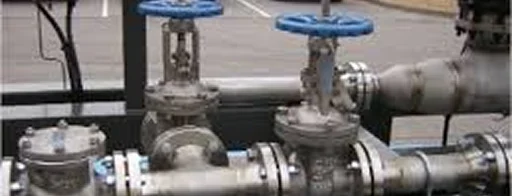
- Operating temperature & pressure: Understanding your operating temperature and pressure is crucial. For high temperature service in boiler tubes, heat exchangers and steam pipelines choose grades like P91 or P22 for their thermal strength. For high pressure duty use alloy steel seamless tubes since they resist deformation under extreme pressure and suit chemical plants and oil pipelines.
Explore: Boiler & Heat Exchanger Tubes - Corrosion resistance requirements: Corrosion can quickly weaken tubes in harsh service, so match the material to the environment. For chemical duty with acids or alkalis use stainless grades like 304L or 316L. For marine and offshore high salinity choose materials with higher chromium nickel and molybdenum or move to nickel alloys. USA Piping Solution can supply alloy steel seamless tubes and corrosion resistant grades to fit your medium and temperature and help extend service life with minimal maintenance.
- Mechanical strength & durability: Mechanical strength matters when systems run under constant stress. Look at tensile strength to see how well the tube handles load, check fatigue resistance for pipelines and heat exchangers that see cyclic pressure, and specify hardness and wear resistance for abrasive or high flow service. Choosing the right grade helps steel seamless pipes carry the load without deforming or failing and keeps performance reliable over the service life.
- Compliance with industry standards: Industrial projects require strict adherence to standards. ASME ASTM and API define the chemical composition mechanical properties and testing protocols for pipes and tubes. Meeting these standards improves safety and reliability and helps secure regulatory approval for both domestic and international projects.
Alloy Steel Pipe Grades - Properties & Uses
Choosing a grade starts with the duty and the dominant damage mechanism; use the concise comparison below with the note that 304L and 316L are stainless steels and often the right choice when wet corrosion dominates even if the project began with alloy steel in mind.
Grade (Spec) |
Key property |
Typical uses |
Temp window |
Corrosion notes |
|---|---|---|---|---|
P11 (ASTM A335) |
High temperature strength |
Boilers, steam lines, headers |
Up to ~540 °C (service dependent) |
Moderate; good hot oxidation; not for chlorides/acidic wet service |
P22 (ASTM A335) |
Enhanced creep resistance |
Superheater/reheater coils, heat exchangers |
Up to ~580 °C |
High; hot oxidation/sulfidation resistance for furnace/stack duty |
P91 (ASTM A335) |
Creep-strength-enhanced ferritic |
Main steam, hot reheat, high-stress power/O&G lines |
Up to ~600 °C (strict WPS/PWHT control) |
Very high at heat; not a substitute for wet-corrosion alloys |
304L (Stainless) |
General corrosion resistance |
Chemical/petrochemical lines, clean steam, food/pharma utilities |
Serviceable to ~870 °C for scaling (allowables vary) |
High; not for high chlorides (>~200 ppm at temp) |
316L (Stainless, Mo-bearing) |
Superior pitting/crevice resistance |
Offshore, desalination, chloride-bearing utilities, CIP lines |
Serviceable to ~900 °C for scaling |
Very high; better than 304L in chlorides |
Selection tip: If the environment is hot and dry/combustion-side, a Cr-Mo P-grade (P11/P22/P91) is typical. If the environment is wet with chlorides/acids, pivot to 304L/316L or even nickel alloys from your catalog.
Industrial Applications of Alloy Steel pipe grades
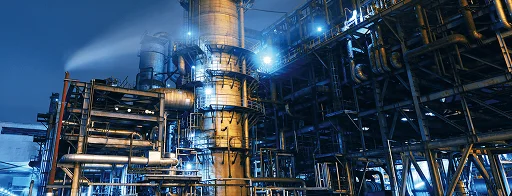
- Oil and gas: applications call for grades P22 and P91. These pipes need high temperature and high pressure resistance with strong corrosion resistance. P22 and P91 help maintain structural integrity in refineries, subsea pipelines and other high pressure environments.
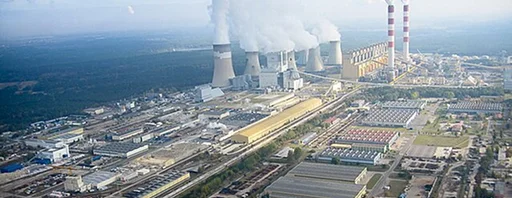
- Power generation: uses P11 P22 and P91 for boiler tubes steam pipelines and heat exchangers because high temperature strength and long term durability are critical for thermal and nuclear plants
- Chemical and petrochemical: services use 304L 316L or Alloy 20 to resist acids alkalis and aggressive compounds ensuring safety and avoiding contamination
- Automotive and aerospace: specify high strength lightweight alloys with strong fatigue resistance and a good strength to weight ratio to optimize performance while minimizing mass
Alloy Steel Pipes Supplier and Manufacturer in USA
Selecting the right alloy steel pipe depends on duty, medium, and code. Choose P11/P22/P91 for high-temperature pressure lines; pivot to 304L/316L/Alloy 20 where wet corrosion dominates. Use seamless for critical service, welded when code and economics allow. USA Piping Solution supplies certified ASTM/ASME materials with full QA/NDE to de-risk projects, share your specs and we’ll match grade, size, and delivery to your operating window.
FAQ for Alloy Steel Pipes
What sizes do alloy steel pipes come in?
Sizes are specified by Nominal Pipe Size (NPS) or Diameter Nominal (DN), with wall by Schedule (Sch) or Wall Thickness (WT). Typical range spans from 1/8" NPS (≈6 mm) small-bore tubing up to 26" NPS (≈600 mm) large diameter. Wall thickness options run from ~0.3 mm (thin-wall) to ~50 mm (heavy-wall), depending on grade, spec, and service.
What is ASTM A335 P22 and which grades do you stock?
ASTM A335 P22 is a Cr-Mo alloy steel pipe grade engineered for high-temperature service (e.g., boilers, steam lines) with improved creep strength and oxidation resistance. We maintain an extensive inventory of ASTM A/ASME SA335 grades P1, P2, P5, P12 (and P22 as application requires) to match pressure/temperature classes and delivery needs.
Our Blog List
Application Industries
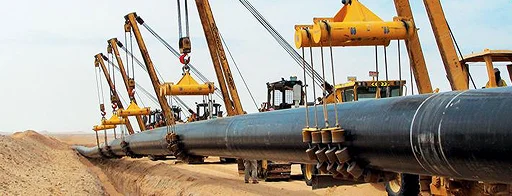 Boilers
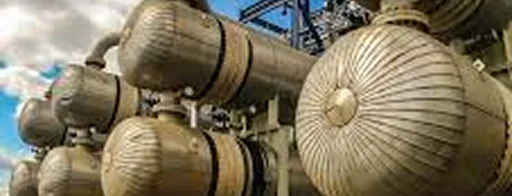 Heat Exchangers
 Power Plants
 Steam Piping
 Refineries
Drop us a line
We respects customer privacy and ensures absolute confidentiality of any information that is given to us.