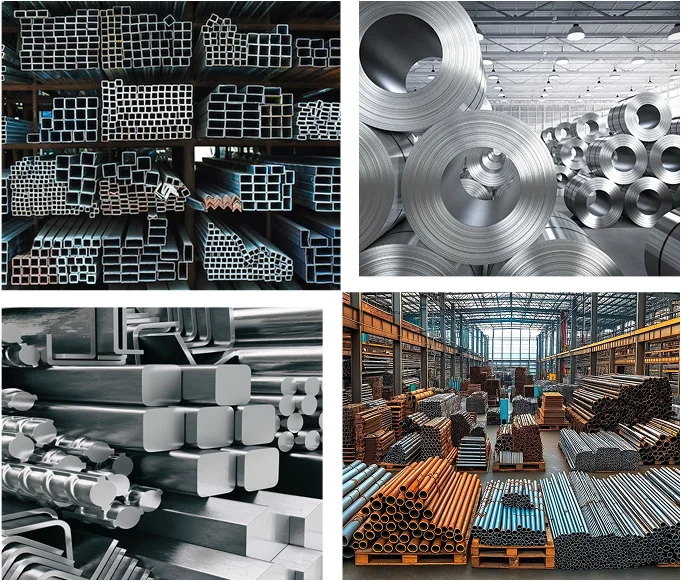
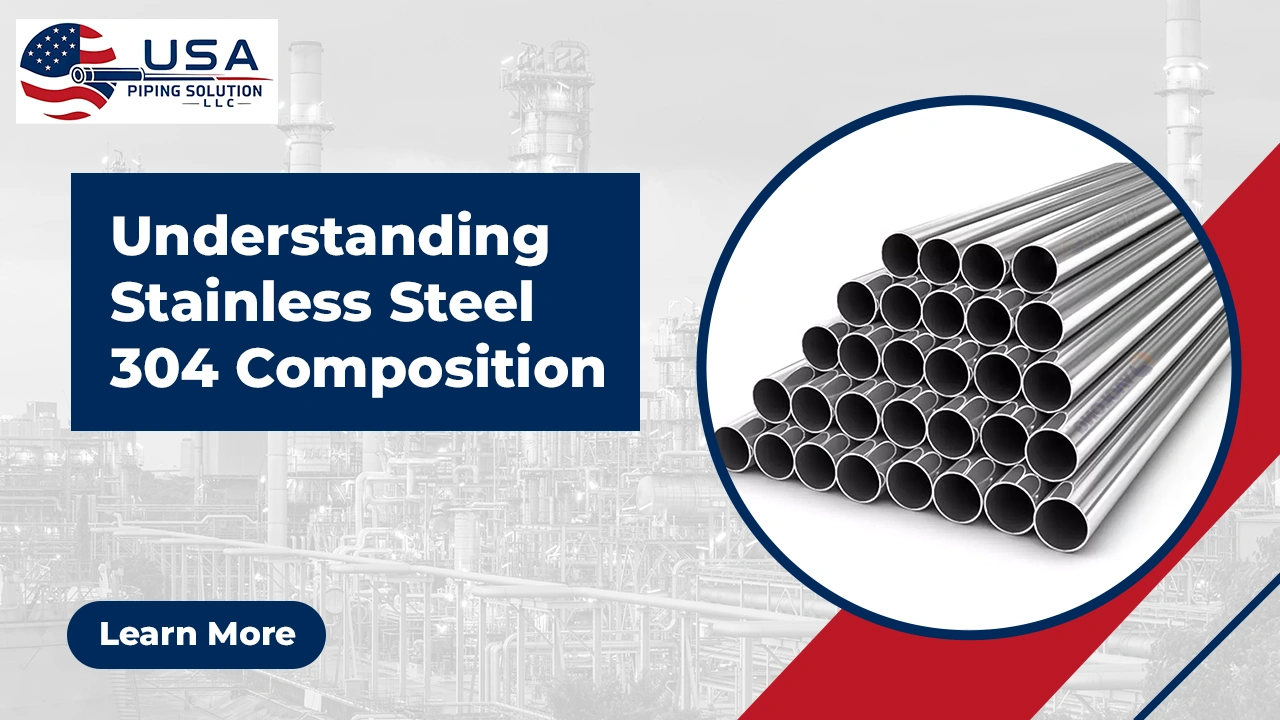
A stainless steel is an expression that is applied in reference to a group of alloys, which consist of iron, carbon, and a minimum of 10.5 percent of chromium. There are numerous types of stainless steel with martensitic, duplex, ferritic, austenitic, and precipitation hardening besides that each type of stainless steel has different grades that can differ depending on the chemical composition.
Among these types, the stainless steel that is mostly used and popular is the 304-grade that is a member of the austenitic family. It offers an excellent level of resistance to corrosion and it can be applied in a broad application. In some cases, also, there is a low-carbon grade 304 known as grade 304L with two certifications. We shall take a look at the chemistry of SS 304, its chemical structure, physical and mechanical characteristics, characteristic features, and uses.
What is SS 304?
The stainless steel 18/8 or SS 304 is stainless steel austenitic alloy. The 18/8 stainless steel is made up of a mixture of 18 percent of chromium and 8 percent of nickel in it therefore it is referred to as 18/8 stainless steel. Moreover, there are a small number of other components that can be found in 304 stainless steel that are carbon, silicon, manganese and phosphorus. It is a combination of the elements that leads to the general characteristics.
The SS 304, also known as the 18/8 stainless steel austenitic alloy. The SS 304 steel is made up with the mixture of chromium and nickel in it therefore it’s also known as 18/8 stainless steel. Other than that the more small metal that is found in this steel is carbon, silicon, magne
Stainless Steel 304 Chemical Composition
| Element | Composition (%) |
|---|---|
| Chromium (Cr) |
18 – 20 |
| Nickel (Ni) |
8 – 10.5 |
| Carbon (C) |
≤ 0.08 |
| Manganese (Mn) |
≤ 2.00 |
| Silicon (Si) |
≤ 0.75 |
| Phosphorus (P) |
≤ 0.045 |
| Sulphur (S) |
≤ 0.03 |
Chromium endows SS 304 with a high corrosion resistant ability whereas nickel increases its ability against oxidation besides giving it resistance against high temperatures making it stable. Carbon improves strength and hardness of the alloy and manganese maintains the austenitic structure. Silicon is also put in to prevent oxidation and increase resistance to scaling and phosphorus and sulphur are checked to give better weldability.
Stainless Steel 304 Properties: Physical and Mechanical Properties
The stainless steel 304 properties render it to be used in a variety of applications. The key stainless steel 304 properties are:
- Density: The stainless steel 304 has a density of about 8 g/cm 3.
- Melting Point: The approximate melting point of 304 stainless steel is 1400-1450 deg C (2550-2650 deg F).
- Tensile Strength: SS 304 is tensile strength of 515 Mpa (75000 psi).
- Yield Strength: SS 304 has a yield strength of 205 Mpa (30000 psi).
- Elongation: There is an elongation of 40 in 304 -grade stainless steel (in 50mm).
- Hardness: The Rockwell hardness of the SS 304 is normally 70 to 90 HRB (Rockwell B Scale).
- Electrical Conductivity: SS 304 is not a good conductor of electricity as compared to such metals as copper and aluminium.
These characteristics render SS 304 applicable in the application in different industries such as the architecture, food processing, chemical processing, and pharmaceuticals.
Industrial Relevance of SS 304
The fact that the SS grade 304 chemical composition is practically uncorrupted by the acidic and oxidizing environments and its outstanding resistance to the corrosion process is more than welcome in the industries. It is typically used in manufacturing of food grade equipment, chemical processing plants and architecture. It can also be easily welded and made and this makes it even more popular in the stainless steel family.
Applications of SS 304
SS 304 finds application in various sectors. It’s applications include:
- Architectural parts- These are bonded as structural parts and decorative elements due to its resistance to corrosion and its looks.
- Food processing equipment - It would be appropriate to food processing equipment that is hygienic, would not be contaminated, and would be easy to clean.
- Chemical processing equipment - The equipment will be resistant to most of the chemicals and this will ensure that it will endure long in the abusive conditions.
- Pharmaceutical equipment - SS 304 keeps the equipments clean and is immune to the recurrent sterilization procedure.
- Heat exchangers - It is defined as good heat transfer, which is highly corrosive and thermal conductivity.
- Kitchen appliances - It is normally applied in the cookware, sinks, and appliances because it is durable and resistant to stains.
- Car parts - Exhaust systems and structural parts Strength and Corrosion resistance.
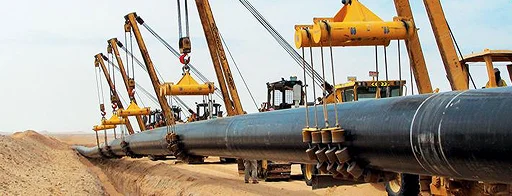
- Oil and gas industry equipment - They are also appropriate to the pipelines and components in salty and corrosive environment.
Get High-Quality SS 304 from USA Piping Solutions!
If you need high-end SS 304 stainless steel to fit a particular job or you just need guidance on which grade to choose, then USA Piping Solutions is the trustworthy partner. Our mission and vision is to provide the best quality stainless steel products and piping solutions at the industry standards and beyond customer expectation. In need of industrial, commercial or custom needs, we have competitive prices and expert advice throughout the entire process.
Contact us or visit our website today to either ask us to quote or find out more about our SS 304 products.
Our Blog List
Application Industries
 Boilers
 Heat Exchangers
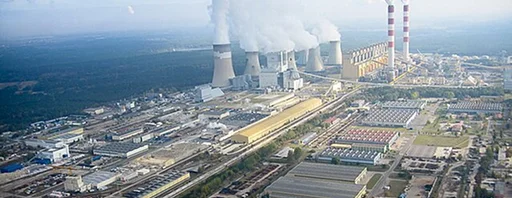 Power Plants
 Steam Piping
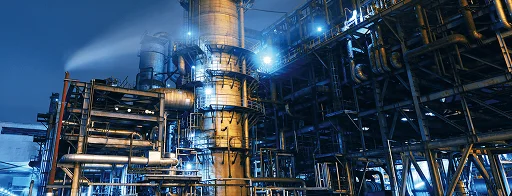 Refineries
Drop us a line
We respects customer privacy and ensures absolute confidentiality of any information that is given to us.