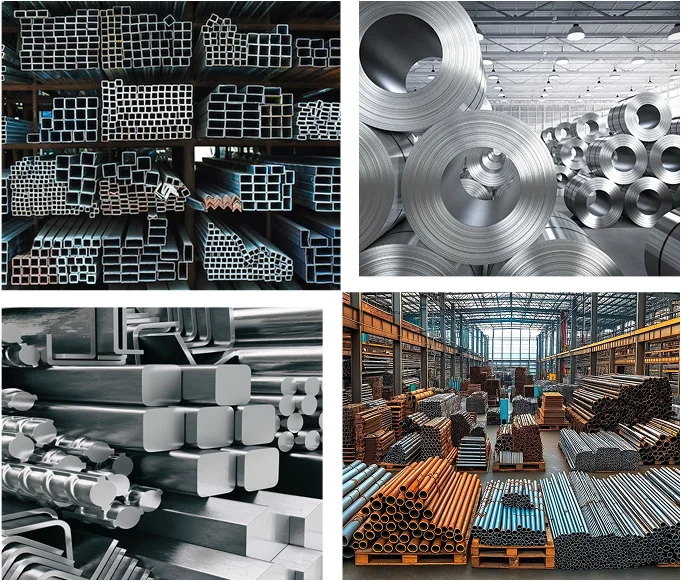

The current industrial world is highly reliant on steel, but not all steel is the same. One of the most common materials is mild steel that is one of the most popular among the grades that are available. And it is this extensive application that has resulted in its popularity among the engineers and the fabricators. Mild steel is applied in many types, in the frame of your car or the frame of skyscrapers.
In case you are keen on knowing the exact mild steel composition percentage or you are simply interested in knowing why it is so popular, then this guide relieves you of all the information you need.
What is Mild Steel?
Mild steel is a form of carbon steel that contains low content of carbon, usually 0.05% and 0.25% . Owing to this particular range, industry analysts call it low carbon steel. Mild steel is ductile and malleable, unlike the high-carbon steels which are hard and brittle. This implies that it is bendable, punchable and shapeable. Although it is not as strong as the alloy steels in tensile properties, it is cheaper and easier to work with and hence the choice for construction and general fabrication.
Mild Steel vs. Carbon Steel
It is important to note that not all carbon steel is mild, yet all mild steel is made of carbon steel. The essential distinction is in the carbon content that significantly changes the performance of the metal.
The higher the carbon level, the stronger and harder but brittle and hard to weld the steel becomes. On the other hand, the reduced amount of carbon (as in mild steel) causes it to become softer, more flexible and simpler to work with.
You can read more about carbon steel here.
Table 1: Quick Comparison- Carbon Steel Grades
|
Steel Grade |
Carbon Content |
Key Characteristics |
Best Used For |
|
Mild Steel |
0.05% – 0.25% |
Tough, ductile, malleable, and very easy to weld. |
Car chassis, structural beams, pipes, furniture. |
|
Medium Carbon |
0.30% – 0.60% |
Balanced strength and hardness; harder to form than mild steel. |
Axles, gears, crankshafts, railway tracks. |
|
High Carbon |
0.60% – 2.50% |
Extremely hard and strong, but brittle and difficult to weld. |
Cutting tools, springs, high-strength wires, knives. |
Chemical Composition Mild Steel
The chemical composition mild steel used has a comparatively simple chemical composition as compared to alloy steels. It is mainly a combination of iron and carbon is the major alloying component. Nevertheless, traces of other components are incorporated to enhance physical characteristics such as strength, wear resistance and tensile strength.
To provide you with a clear picture of the composition of mild steel, a break down of the typical elements contained in a typical grade, such as AISI 1018 or EN 1.0038 is as follows:
- Carbon (0.05% - 0.25%): The defining element is carbon. Maintaining the low carbon content keeps the steel brittle. This low mild steel composition enables the material to be soft enough to be machined and welded and still have enough strength to be used structurally.
- Manganese (0.30% - 0.90%): Manganese is a deoxidizer and it serves to make the steel strong. It is essential in hardening and enhances wear resistance of the material.
- Silicon (Up to 0.40%): A deoxidizing agent (silicon) is usually introduced during the casting process. It assists in the elimination of oxygen bubbles within the melted metal which creates a sounder, more uniform inner structure.
- Sulfur (Max 0.05%): Sulfur is normally regarded as a contamination. Manufacturers maintain low level of sulfur (mostly less than 0.05) since too much sulfur may result in a phenomenon of hot shortness or the steel will crack during hot rolling or forging.
- Phosphorus (Max 0.04%): Similar to sulfur, phosphorus is tendency limited. Although it may make it stronger, excessive phosphorus decreases the ductility, and may make the steel crack upon cold.
- Iron (Balance, approx. 98% - 99%): The rest of the percentage of mild steel composition is pure iron. This is because mild steel has high iron content which allows it to have magnetic properties unlike most types of stainless steel.
Note: These percentages may vary slightly depending on various standards (ASTM, AISI, SAE), though the overall chemical composition that mild steel is based on is the same throughout the industry.
Key Properties of Mild Steel
The know-how of the mild steel composition will make it understand why it acts the way it does. The following are the most notable qualities that make it popular:
- Ductility & Malleability: Since it does not contain large quantities of carbon the mild steel is plasticly deformed and does not break. This is very suitable in cold-forming processes such as bending of wires or stamping of automobile panels.
- Weldability: This is possibly its greatest benefit. Mild steel can easily be welded using common methods (MIG, TIG, Stick) with the advantage that it allows cracking during welding even with a high carbon content without involving complicated pre-heating or post-weld processes.
- Magnetic Characteristics: Mildred steel because of its large rate of iron is ferro-magnetic. It can be applied in cases of the motors and electrical appliances.
- Corrosion susceptibility: Corrosion is one of the weaknesses. Mild steel, unlike stainless steel, does not have chromium (forming a protective oxide covering). Therefore, it rusts when it is not treated in a wet setting. This is usually prevented by galvanizing it, painting it or coating it with powder.
Common Grades of Mild Steel
When ordering materials, you will rarely ask for just "mild steel." You will likely encounter specific grades.
- ASTM A36: The standard for structural steel in the USA (plates, beams).
- AISI 1018: A general-purpose grade known for good surface hardness and a smooth finish, often used for machined parts.
- EN 1.0038 (S235JR): A standard European structural grade widely used in construction.
Applications of Mild Steel
Due to its moderate strength-cost ratio, mild steel is available in nearly all industries:
- Construction: It is used in buildings to construct I-beams, columns and channels. It is safer than brittle materials because it can flex a little when subjected to wind or seismic loads without breaking.
- Automotive: Automobiles use mild steel in car chassis, body parts and wheel rims. It is also an advantage to the manufacturers since it captures the impact energy during a crash and thus shields the passengers.
- Machinery: Most gears, bolts, nuts, and shafts are machined using grades such as 1018.
- Pipelines & Tubing: It is highly weldable, and therefore it is also optimal in the transportation of water, gas, and other non-corrosive fluids.
- Cookware & Furniture: Starting with tough frying pans, as well as tables that resemble those found in an industry, its flexibility can be used to create complex designs.
The Bottom Line
Mild steel remains the workhorse of the metal industry. The balance of low carbon content is a dream, which provides a tough and workable material, a strong and inexpensive one. With the knowledge of the mild steel composition percentage and the chemical composition of the same, engineers will be able to better choose the appropriate grade of the mild steel composition in their particular project.
Be it welding a homebuilt frame or the acquisition of materials in a large scale infrastructure project, mild steel provides an economical and dependable alternative, which has proven to stand the test of time.
Your Trusted Source for Mild Steel
USA Piping Solution is a leading mild steel manufacturer and mild steel supplier and offers a wide range of products based on low-carbon steel.
Our products are high-quality mild steel pipes, tubes, plates, sheets, fittings, and flanges to accommodate the strict conditions of the construction, manufacturing, and structural projects around the world.
Ready to discuss your project needs? Contact us today for a quick quote!
Related Products Of Alloy Steel
| Alloy Steel Pipes & Tubes |
Alloy Steel Seamless Pipes & Tubes |
ASTM A213 T91 Alloy Steel Seamless Tubes |
ASTM A213 T9 Alloy Steel Seamless Tubes |
FAQs about Mild Steel
What is the strongest Mild Steel Grade?
The proportionate strength is greater with the carbon content. AISI 1020 is typically the strongest of the common commercial grades and it has better tensile strength than 1018 on account of its high carbon. The only trade-off is a marginally lower ductility (flexibility) than with lower carbon steel grades.
What is the high melting point of Mild Steel?
Mild steel is liquid at a range of temperatures between 1450 deg C and 1530 deg C. The exact temperature of the grade depends on the exact amount of carbon and alloy. An increased carbon usually has a somewhat reduced melting temperature over this range.
What are the environmental implications of mild steel?
Mild steel is very sustainable as it can be recycled 100 percent giving it an opportunity to reuse it and produce little waste. Nevertheless, the original extraction of raw materials and the conventional blast furnace production are energy-consuming activities which produce green house gases. The mitigation measure that the industry is taking towards this is incorporation of cleaner electric arc furnace (EAF).
Can mild steel be welded?
Mild steel is the best suited for welding. It has low carbon content which is important because the material will not undergo hardening and brittle nature upon heating thereby reducing the likelihood of developing weld cracks. Common processes such as MIG (Gas Metal Arc Welding) or Stick (Shielded Metal Arc Welding) can easily be joined with the common filler materials.
Our Blog List
Application Industries
 Boilers
 Heat Exchangers
 Power Plants
 Steam Piping
 Refineries
Drop us a line
We respects customer privacy and ensures absolute confidentiality of any information that is given to us.