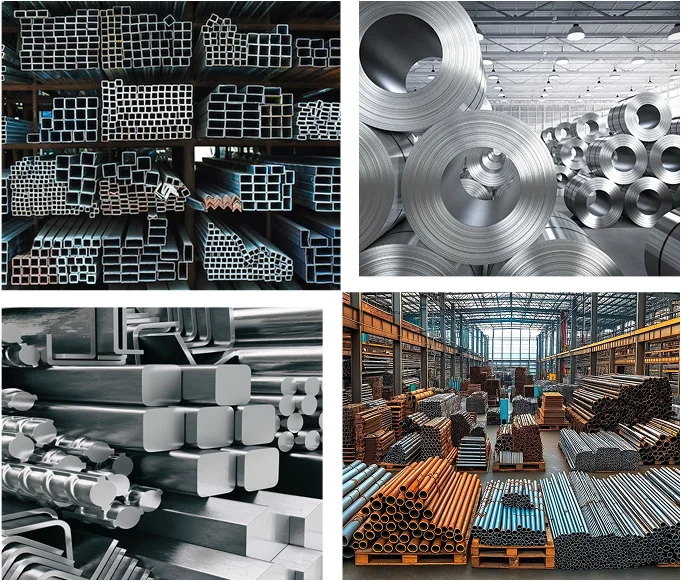
.webp)
One of the most popular engineering materials is carbon steel due to the tuning characteristic of its performance which is primarily determined by the carbon content in carbon steel. The higher the carbon content, the stronger and harder you are likely to become, and the ductility and weldability are likely to decrease--the most appropriate decision will be, therefore, on the conditions of service, the fabrication process, and the budget.
In case you are specifying carbon steel piping systems, pressure service, fabrication or plant maintenance, USA Piping Solution can help with these needs with a huge selection of products- either start with Carbon Steel Pipes and Tubes or consider the entire Pipes and Tubes selection to find a project-specific solution.
Definition of Carbon Steel
A common definition defines carbon steel as a steel alloy with about 0.12 percent to 2 percent carbon, and (crucially) not satisfying the certified minimum content of other significant alloying elements to qualify as another type of steel.
It is this definition that dictates the large performance spread of carbon steel, between very formable low-carbon grades to very hard high-carbon grades, which is motivated to a large degree by carbon content in carbon steel.
Carbon Steel Chemical Properties
At USA Piping Solution, we take care of the fact that our carbon steel pipes and tubes are well made to meet specifications to the required very exact characteristics of safe, dependable and extended life time use by the industry. The smooth welded products are made under the tight quality measures, so that the performance of our products remains consistent between the various pressure ratings and conditions.
Carbon Steel Physical Properties
|
PHYSICAL PROPERTIES |
METRIC |
ENGLISH |
COMMENTS |
|---|---|---|---|
|
Density |
7.87 g/cc |
0.284 lb/in³ |
Typical for steel |
Carbon Steel Mechanical Properties
|
MECHANICAL PROPERTIES |
METRIC |
ENGLISH |
COMMENTS |
|---|---|---|---|
|
Hardness, Brinell |
163 |
163 |
|
|
Hardness, Knoop |
184 |
184 |
Converted from Brinell hardness |
|
Hardness, Rockwell B |
84 |
84 |
Converted from Brinell hardness |
|
Hardness, Vickers |
170 |
170 |
Converted from Brinell hardness |
|
Tensile Strength, Ultimate |
540 MPa |
78300 psi |
|
|
Tensile Strength, Yield |
415 MPa |
60200 psi |
|
|
Elongation at Break |
10% |
10% |
|
|
Reduction of Area |
35% |
35% |
|
|
Modulus of Elasticity |
200 GPa |
29000 ksi |
Typical for Steel |
|
Bulk Modulus |
140 GPa |
20300 ksi |
Typical for Steel |
|
Poisson's Ratio |
0.29 |
0.29 |
Typical for Steel |
|
Machinability |
160% |
160% |
Based on 100% machinability for AISI 1212 steel |
|
Shear Modulus |
80 GPa |
11600 ksi |
Typical for Steel |
Types and Properties of Carbon Steel
Carbon steel can be characterized into three broad categories depending on its carbon content levels including low-carbon steel (also referred to as mild steel), medium-carbon steel and high-carbon steel. Their comparison in terms of carbon content, microstructure and properties is presented below:
|
Type |
Carbon Content (%) |
Microstructure |
Properties |
Examples |
|---|---|---|---|---|
|
Low-carbon steel |
0.05 – 0.25 |
Ferrite, pearlite |
Low hardness and cost. High ductility, toughness, machinability, and weldability |
AISI 304, ASTM A815, AISI 316L |
|
Medium-carbon steel |
0.30 – 0.50 |
Martensite |
Low hardenability, medium strength, ductility, and toughness |
AISI 409, ASTM A29, SCM435 |
|
High-carbon steel |
0.60 – 1.00 |
Pearlite |
High hardness and strength, low ductility |
AISI 440C, EN 10088-3 |
For project buying/spec'ing: USA Piping Solution's catalog can support these choices with carbon steel product categories including:
- Carbon Steel Pipes & Tubes
- ASTM A53 Seamless Pipe
- Carbon Steel & Alloy Steel Plates
- Pipe Fittings & Flanges
Low Carbon Steel
Low carbon steels are generally between 0.05-0.29 percent carbon and are usually chosen when formability, weldability, and cost are of the greatest concern. Since the amount of carbon is relatively low, these steels are not easily hardened all the way (but surface-hardening processes, such as case hardening are available).
Low carbon steel characteristics (what to expect)
In a practical sense, low carbon steel properties consist of high ductility in bending and forming, as well as, reliable weldability, and are thus a popular material in general fabrication. The tensile strength is not very high as compared to higher-carbon grades, yet the formability is very impressive, which means that it can be used in numerous structural and light-to-moderate load applications.
Common applications of low carbon steel
Brackets, sheet metal panels, and cladding, as well as appliance frames/enclosures, are commonly made of low carbon grades.
If your project needs dependable, widely standardized piping materials, USA Piping Solution's Carbon Steel Pipes & Tubes range includes common pressure and structural pipe standards (including ASTM options) and both seamless and welded formats for different service needs.
Medium Carbon Steel
The medium carbon steels properties are typically between 0.3 and 0.6 per cent carbon, providing an appropriate compromise: they are stronger and harder than low carbon steel, and less ductile. This type cuts and drills well and fabrication may need attention, namely tight bending and some welding.
Medium carbon steel properties (strength vs. ductility trade-offs)
In practice in fabrication Medium carbon steel properties usually indicate better tensile strength and hardness, and ductility is lower, which means that cracking may become an issue during aggressive forming. Welding typically can be performed but certain thicknesses as well as grades may need such procedures as preheating or post-weld heat treatment in order to minimize stress and the risk of crack propagation.
Typical uses of medium carbon steel
Medium carbon steels often appear in gears, shafts, couplers, rail wheels, forged components and other high wear mechanical parts--where you would like to have higher strength than with mild steel, but not very high concerned carbon content.
High Carbon Steel
High carbon steels generally exceed a level of carbon that is around 0.6 percent and it is characterized by extremely high hardness and compressive strength and low ductility. That is why the high-carbon steels are commonly selected as the material of a tool or a component that should be resistant to abrasion and maintain an advantage.
High carbon steel properties (hardness & wear resistance)
Practically the high carbon steel properties are directly connected to the wear performance: the high-carbon steels may be annealed and then heat treated to hardness. but with increase in carbon, ductility is likely to decrease, thus, these steels are harder to shape or to solder and they can break when put to tensile stress when used improperly.
Typical uses of high carbon steel
Typical ones are knives, scraper blades, drills, tabs, wear resistant parts, pins, and couplers- the areas where abrasion resistance and hardness are the driving factors.
The Bottom Line: Choosing the Right Carbon Steel for Your Project
A practical way of choosing between low/ medium/ high carbon steel is determining what is essential: cost, strength or hardness. Low carbon tends to be the least costly and simplest to make, (high carbon can be the easiest when retaining edges or resistance to abrasion is important); alloy and other high performance options can also be favored when you are after high performance with an ability to be made.
In case your project deals with piping systems, you will also need to align product form to function:
- Pipes are generally defined in nominal pipe size (NPS) and schedule in pressure service.
- Tubes have specified OD and wall thickness which are precise/structural requirements.
To spec and source accordingly, you can navigate directly to USA Piping Solution's relevant product pages:
- Pressure/utility piping: ASTM A53 Pipes
- Broad carbon steel options: Carbon Steel Pipes & Tubes
- Heat transfer service: Boiler & Heat Exchanger Tubes
Our Blog List
Application Industries
 Boilers
 Heat Exchangers
 Power Plants
 Steam Piping
 Refineries
Drop us a line
We respects customer privacy and ensures absolute confidentiality of any information that is given to us.