.webp)
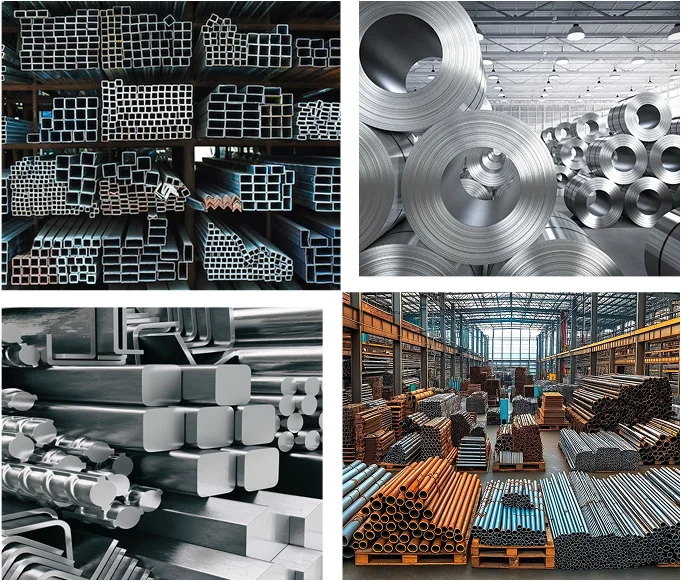
Learning about the density of steel is essential to engineers, fabricators, and procurement experts that deal with structural material and piping systems in industries. You need to know the density of steel accurately whether you are computing the quantities of materials needed to construct a building, whether you are designing a pressure vessel or specifying piping parts so that weight calculations, cost estimates, and structure integrity calculations will be accurate. This is a definitive guide to the density properties of different types of steel, especially paying attention to mild steel and carbon steel these are two of the most popular steel types used in the industry.
What is Density?
Given that specific steel grades are discussed, it is important to have an idea about what is meant by the density in the world of materials science. The density is a major physical property which determines the concentration of matter within a certain space. Technically, density is used to describe the mass of a substance in terms of its volume giving the formula:
Density (ρ) = Mass (m) / Volume (V)
This connection informs us of the atomic size of a material on a small scale. An example is steel which has a tight arrangement of molecules, making it very dense, unlike materials such as aluminum or titanium. The density is an intensive property, i.e. it does not change with how much material is there, a small piece of steel has the same density as a huge steel beam.
In industrial applications, steel density is typically measured in:
- Metric units: grams per cubic centimeter (g/cm³) or kilograms per cubic meter (kg/m³)
- Imperial units: pounds per cubic inch (lb/in³) or pounds per cubic foot (lb/ft³)
These measurements are important in understanding when dealing with international suppliers and specifications and in particular when dealing with all-encompassing distributors like USA Piping Solution.
What is Steel's Density?
The average steel density is normally 7.85 g/cm³ (7,850 kg/m³) or approximately 490 lb/ft³ (0.283 lb/in³). This is what causes steel to be very heavy compared to other metals commonly used- it is about twice as dense as titanium and three times as dense as aluminum. This property density is the basis of the high level of strength, structural rigidity, and load-bearing of steel.
It is however necessary to note that, there is no single homogeneous material known as steel. The alloy composition of steel, the proportion of carbon in steel and the grade all determine the density of steel. The density of steel can be adjusted by manufacturers through a close regulation of the amount of alloying elements like carbon, chromium, nickel and molybdenum. These differences though they may be minor are at times strong and they may influence the choice of material that may be used in specialized use.
Density of steel is of great importance in:
- Weight calculations for structural design and shipping logistics
- Load capacity assessments for buildings, bridges, and industrial equipment
- Material cost estimation based on weight-based pricing
- Fabrication planning for machining, forming, and welding operations
- Transportation logistics when moving carbon steel pipes, plates, and structural components
Understanding Steel Density Composition
The alloy make up and the atomic bonding of the crystalline structure are inherently associated with the density of steel. Carbon is the most important element that determines steel density, although other alloying elements will also affect the ultimate density.
Carbon Content Influence
In carbon steel alloys, carbon content can be 0.05 to 2.0 per cent that affects significantly the density and the mechanical properties:
- Low Carbon Steel (Mild Steel): This contains 0.05 to 0.25 per cent of carbon and is characterized by a density of about 7.85 g/cm3.
- Medium Carbon Steel: It consists of 0.25 percent -0.60 percent carbon with a density slightly varied.
- High Carbon Steel: It contains 0.60 to 2.0 percent carbon, and it is 7.75 to 8.05g/cm3.
Density is usually achieved by increment of carbon content and correspondingly hardness and tensile strength is increased. This also damages ductility and weldability but this is also a crucial aspect to be considered, when selecting the material to be used in carbon steel fittings and flanges.
Alloying Elements Impact
Other alloying elements alter the density of steel apart than carbon:
- Chromium and Nickel: Enhance density, as well as enhance corrosion resistance.
- Molybdenum: Strengthens at high temperature with reduction in density.
- Manganese: Enhances hardenability and with negligible variation of density.
- Silicon: Strengthens and increases resistance to electricity.
These compositional relationships can be understood by engineers to choose the right grades among the suppliers such as USA Piping Solution which has complete carbon and alloy steel plates depending on the density and performance needs.
Density of Carbon Steel
Carbon steel is a very popular material in industrial construction, pipeline and structural applications given its great strengths to cost ratio and its diverse characteristics. Density of carbon steel varies depending on the type of carbon set:
|
Type of Carbon Steel |
Density (g/cm³) |
Density (lb/in³) |
Carbon Content |
|---|---|---|---|
|
Plain Carbon Steel |
7.75 - 8.05 |
0.280 - 0.291 |
Varies |
|
Low Carbon Steel (Mild Steel) |
7.85 |
0.283 |
0.05% - 0.25% |
|
Medium Carbon Steel |
7.85 |
0.283 |
0.25% - 0.60% |
|
High Carbon Steel |
7.75 - 8.05 |
0.280 - 0.291 |
0.60% - 2.0% |
Common Carbon Steel Grades
The following are some of the most common carbon steel grades:
- ASTM A53 Grade B: One of the most commonly used carbon steel grades in piping, and is densely populated at 7.85 g/cm and (0.283 lb/in3). The carbon steel seamless pipes find applications in oil and gas, water distribution and structural pipes.
- ASTM A106 Grade B: This is the other common pressure pipe specification that has density of 7.86 g / cm3 (0.284 lb/in3) and is highly weldable and forms well. USA Piping Solution holds massive stocks of ASTM A106 seamless pipes.
- ASTM A36: This is the most prevalent structural steel grade, the density of which is 7.80 g/cm3 (0.281 lb/in3), and is commonly used in the forms of beams, columns, and carbon steel flanges in construction.
The uniform density of carbon steel is predictable in terms of engineering calculations and cost estimation. Even in the design of piping systems or structural framework, the engineers have the confidence that they can use the standard density values and be assured that the weight difference will be small based on given grades.
Density of Mild Steel
Low carbon steel or mild steel is one of the most common types of steel, which is rather flexible and relatively cheap. The density of mild steel is about 7.85 g/cm 3 (7850 kg/m 3 or 0.283 lb/in 3 ) which is very consistent, even between grades and applications.
Mild Steel Grades and Their Densities
|
Mild Steel Grade |
Density (kg/m³) |
Density (lb/in³) |
Primary Applications |
|---|---|---|---|
|
ASTM A572 |
7,966 |
0.282 |
Structural construction, bridges |
|
IS 2062 |
7,850 |
0.283 |
General engineering structures |
|
ASTM A36 |
7,800 |
0.281 |
Buildings, pressure vessels |
|
IS 1239 / IS 3589 |
7,860 |
0.283 |
Pipe manufacturing |
Why Mild Steel Density Matters
The consistency in the density of mild steel of about 7.85 g/cm3 renders mild steel ideal in:
- Fabrication Predictability: The manufacturers are able to predict the quantity of material needed in carbon steel welded pipes and tubes and have no major changes in density of the material between each batch.
- Cost Efficiency: When the density is held constant, procurement teams are able to accurately estimate the project costs using weights eliminating uncertainty in the budgets.
- Weldability: The uniform density also provides uniform welding properties so mild steel is very appropriate in the production of complex piping networks and structural assemblies.
- Machinability: Density is predictable and has a consistent machining behavior minimizing the tool wear and enhancing dimensional accuracy of the fabricated components.
The low carbon content (0.05% to 0.25) of the mild steel also means it has good ductility and formability, but the structural density required in the load-bearing applications. This equilibrium makes mild steel the material of choice in carbon steel fittings and flanges when moderate pressure piping systems are used.
How to Calculate Steel Weight Using Density
Calculation of the weight is necessary when planning the project, shipping logistics and estimation of the cost. Steel weight calculator formula involves the density as a basic input:
Weight = Density x Volume
Or in other words: Wt (kg) = Density (kg/m3) x Length (m) x Width (m) x Thickness (m).
Density Comparison: Steel vs. Other Materials
The relationship between steel density and other typical industrial materials would be of great help when making decisions on material selection:
Steel vs. Stainless Steel
Carbon steel has a mean density of 7.85 g/cm3, and stainless steel grades have an average density of 7.70 to 8.03 g/cm3 between different grades, based on the composition:
- Austenitic Stainless Steel (304/316): 7.93-7.98 g/cm³ (0.286-0.288 lb/in³)
- Ferritic Stainless Steel (430): 7.70 g/cm³ (0.278 lb/in³)
- Martensitic Stainless Steel (410): 7.75 g/cm³ (0.280 lb/in³)
- Duplex Stainless Steel (2205): 7.80 g/cm³ (0.282 lb/in³)
Chromium and nickel additions lead to the slightly increased density of many of the stainless steel grades.When defining stainless steel pipes and tubes, these density variations are important when a large-volume application is required where the weight is the crucial factor.
Steel vs. Alloy Steel
Alloy steels, containing such elements as chromium, molybdenum, and vanadium, have a different density:
- Low Alloy Steel: 7.50-8.08 g/cm³ (0.271-0.292 lb/in³)
- Medium Alloy Steel: 6.60-7.86 g/cm³ (0.238-0.284 lb/in³)
These variations make alloy steel seamless pipes suitable for specialized high-temperature and high-pressure applications where specific density-to-strength ratios are required.
Steel vs. Lightweight Metals
Compared to lightweight alternatives:
- Aluminum: 2.70 g/cm³ (approximately 1/3 the density of steel)
- Titanium: 4.51 g/cm³ (approximately 57% of steel's density)
Although such materials have weight savings, the increased density of steel is associated with increased strength, rigidity and load-bearing capacity which are the desired features in industrial piping, pressure vessels and structural applications.
Why Steel Density Matters in Industrial Applications
Knowing the steel density is not only an academic exercise, it carries significant practical consequences in various ways of industrial projects:
Structural Engineering
One of the considerations that engineers should take into account when constructing buildings, bridges, and support structures is the density of steel. The ratio of weight to the strength affects:
- Requirements and load distribution.
- Calculation of seismics and wind resistance.
- Logistics of transportation and installation of the large elements of the structure
Piping System Design
Density of carbon steel influences in oil and gas, chemical processing and power generation:
- Pipe run support and design of hangers.
- High temperature service calculations Thermal expansion.
- Wall thickness specifications and pressure ratings.
- Installation expenses and labour needs.
Material Procurement and Cost Estimation
Information on proper density of steel allows:
- Accurate calculations of the amount of material.
- Proper cost control and budget forecasting.
- Efficient inventory control.
- Effective shipping and logistics strategy.
Fabrication and Manufacturing
The density of mild steel affect:
- Selection of cutting tools and machining parameters.
- Developing force demand of bending and rolling processes.
- Welding process, heat input determination.
The Bottom Line
One of the basic properties of steel is the density of steel which is about 7.85 g/cm3 for most carbon and mild steel grades. This density affects all considerations of a material choice, engineering design, production, and project implementation. Knowledge of the density of carbon steel, density of mild steel, and different alloy grades would enable the engineers, fabricators and procurement experts to make sound choices that help to maximize performance, cost, and safety.
Whether you're specifying carbon steel seamless pipes to use in a petrochemical plant, or selecting structural steel plates to use in a construction project, or designing a complicated network of piping with carbon steel fittings and flanges, correct knowledge of density makes the difference between correct calculations and successful projects.
At USA Piping Solution, we know that such properties of materials as density are important to the success of your project. Nonstop carbon steel, alloy steel, and stainless steel products, all of which are certified to meet ASTM, ASME, and international standards, will provide you with materials of consistent and reliable properties. Get in touch with our technical team and talk about your desired density requirements and get professional advice on the choice of materials to use in your new project.
Our Blog List
Application Industries
 Boilers
 Heat Exchangers
 Power Plants
 Steam Piping
 Refineries
Drop us a line
We respects customer privacy and ensures absolute confidentiality of any information that is given to us.