
What Are ASTM A694 F65 Flanges?
ASTM A694 F65 flanges are high-strength forged components produced from high-yield carbon or low-alloy steel. Governed by ASTM International standards, the ASTM A694 F65 material designation indicates a controlled chemistry and mechanical property requirement designed specifically for high-pressure pipeline transmission systems.
Unlike general-purpose carbon steel flanges, this grade is developed to match the strength requirements of API 5L X65 pipeline systems. The high yield strength ensures that the flange does not become the limiting component in the pipeline pressure envelope.
These flanges create secure mechanical connections between pipes, valves, and equipment. By bolting two ASTM A694 F65 flanges together with a gasket, a leak-tight joint is formed that allows maintenance access without cutting the pipeline.
Compared with standard ASTM A105 flanges, ASTM A694 F65 material provides superior strength and verified impact toughness. Mechanical qualification includes tensile testing and optional Charpy V-notch testing when supplementary requirements are specified.
ASTM A694 F65 Material Specifications
The ASTM A694 F65 material specification defines mechanical performance rather than a fixed chemistry, allowing controlled alloying to achieve required strength and toughness.
| Property | Details |
|---|---|
| Material Grade | ASTM A694 F65 (High-Yield Carbon/Low-Alloy Steel) |
| Equivalent Standards | ASME SA694 F65, MSS SP-44, CSA Z245.12 |
| Manufacturing Process | Hot Forging, Rolling, CNC Machining |
| Size Range | 1/2" NB to 64" NB |
| Pressure Ratings | ASME Class 150# to 2500# |
| Dimensional Standards | ASME B16.5, B16.47 (Series A & B), API 605, MSS SP44 |
| Wall Thickness | Sch 10s to Sch XXS |
| Flange Facings | FF, RF, RTJ |
| Heat Treatment | Annealed, Normalized, Normalized & Tempered, or Quenched & Tempered |
| Surface Treatment | Anti-rust Oil, Black Paint, Zinc Plated, Hot Dip Galvanized |
Heat treatment condition is specified by purchaser to ensure compliance with required mechanical properties and service conditions.
ASTM A694 F65 Mechanical Properties
The ASTM A694 F65 mechanical properties are verified through tensile and impact testing to confirm compliance with minimum yield strength and ductility requirements.
All values per ASTM A694 / ASME SA694.
| Property | Requirement | Unit | Test Method |
|---|---|---|---|
| Tensile Strength (min) | 80,000 | psi (552 MPa) | ASTM E8 |
| Yield Strength (min) | 65,000 | psi (448 MPa) | ASTM E8 |
| Elongation in 2″ (min) | 20 | % | ASTM E8 |
| Reduction of Area (min) | 30 | % | ASTM E8 |
| Charpy Impact (absorbed energy) | 40 / 27 | ft·lbf / J | ASTM E23 |
| Hardness (max, Brinell) | 197 | HBW | ASTM E10 |
* Charpy V-notch impact testing required at temperature as agreed between purchaser and supplier per Supplementary Requirement S1 or S2.
ASTM A694 F65 Chemical Composition
The ASTM A694 F65 chemical composition is not fixed by the standard. Instead, the chemistry must support the required mechanical properties. Typical heat analysis for A694 F65 material is shown below:
| Element | Max % |
|---|---|
| Carbon (C) | 0.35 |
| Manganese (Mn) | 1.05 |
| Phosphorus (P) | 0.035 |
| Sulfur (S) | 0.040 |
| Silicon (Si) | 0.35 |
| Nickel (Ni) | 0.40 |
| Chromium (Cr) | 0.30 |
| Molybdenum (Mo) | 0.12 |
| Vanadium (V) | 0.05 |
Product analysis tolerances per ASTM A694 Table 1. Alloy chemistry variants available for elevated temperatures or sour service (NACE MR0175).
A694 F65 Material Equivalent
There is no exact international one-to-one equivalent for A694 F65 equivalent material, as the specification is performance-based. However, similar high-yield forging grades include:
| Standard / Code | Comparable Grade |
|---|---|
| ASME | SA694 F65 |
| API | API 6A Forging Grades (project-specific) |
| CSA | CSA Z245.12 Grade 448 |
| EN | EN 10222 High-Yield Forgings |
Material substitution must always be validated against mechanical properties, chemical composition, heat treatment condition, impact requirements, and applicable project specifications.
F65 vs F60 / F70 Grade Comparison
Use this comparison to select the correct grade for your operating pressure and temperature envelope.
| Property | F65 | F60 | F70 |
|---|---|---|---|
| Minimum Yield | 65 ksi | 60 ksi | 70 ksi |
| Tensile Strength | 80 ksi | 75 ksi | 82 ksi |
| Elongation | 20% | 20% | 18–20% |
| Hardness | 197 HBW | 197 HBW | 197 HBW |
| Matching Pipe | API 5L X65 | API 5L X60 | API 5L X70 |
The higher yield designation in ASTM A694 F65 flanges ensures structural compatibility with corresponding line pipe grades.
Manufacturing Process Flow of ASTM A694 Gr F65
Each stage ensures compliance with the ASTM A694 F65 material specification and dimensional standards.
Billet Selection &
Chemistry Verification
Induction Heating
(1050–1250°C)
Closed-Die Forging
Normalize + Temper
(or Q&T)
Rough Machining & NDE
Final Machining & Marking
Industrial Applications & Service Areas of ASTM A694 F65 Flange
F65 flanges are selected where the pipeline operates at elevated pressures and where yield strength must match API 5L Grade X65 linepipe, ensuring no weak point at the flange joint.
Types of A694 F65 Flanges
Available in six standard flange types per ASME B16.5. Images show representative finished forgings post-machining.
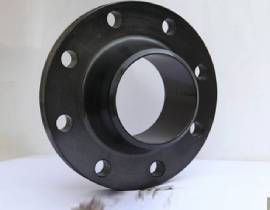
ASTM A694 F65 Welding Neck Flange
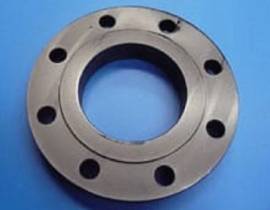
ASTM A694 F65 Slip On Flange
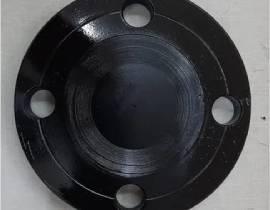
ASTM A694 F65 Blind Flange
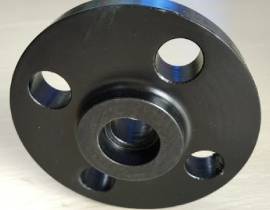
ASTM A694 F65 Socket Weld Flange
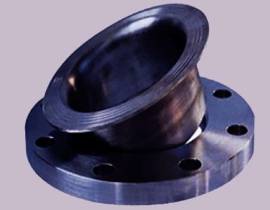
ASTM A694 F65 Lap Joint Flange
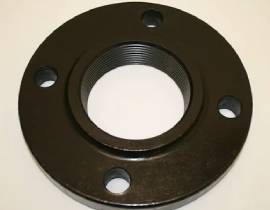
ASTM A694 F65 Threaded Flange
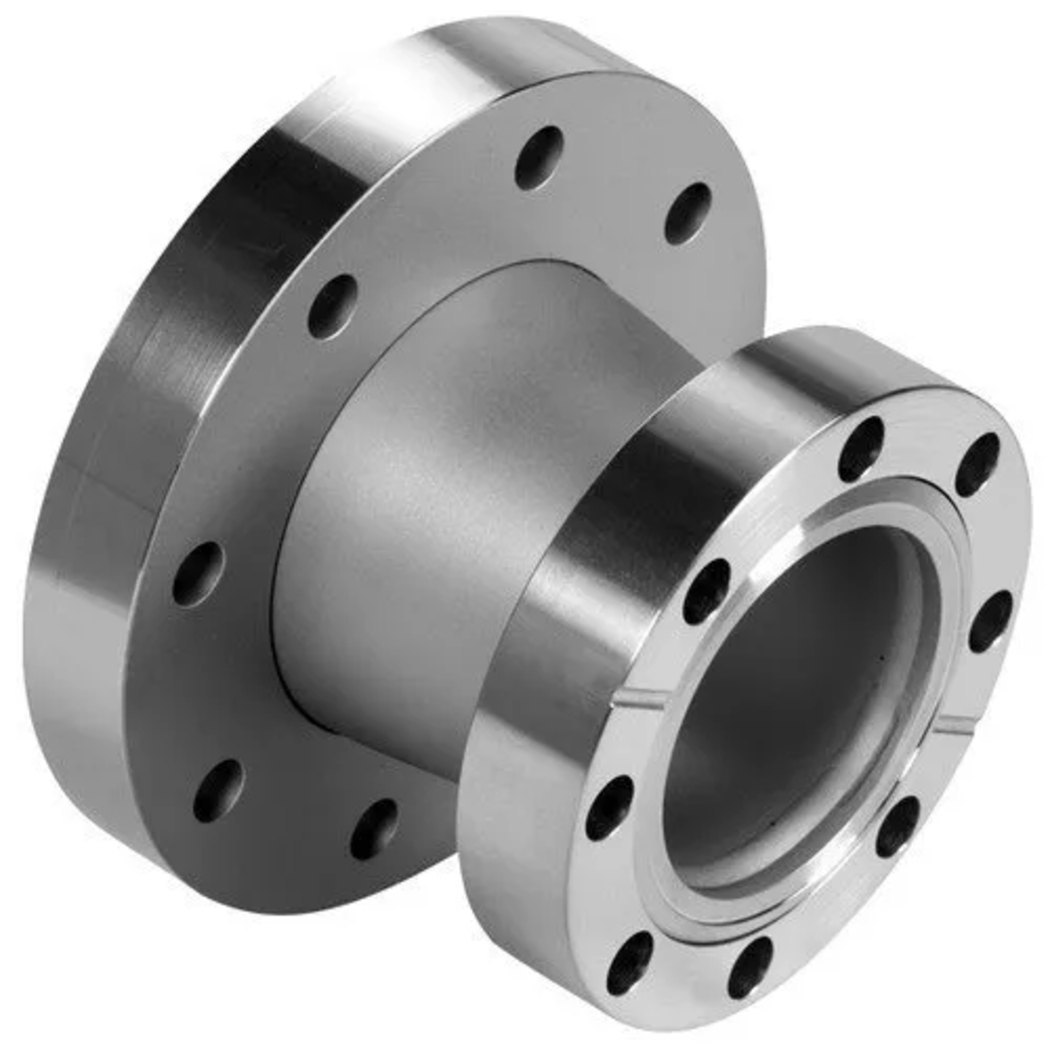
Frequently Asked Questions
What pipe grade is ASTM A694 F65 designed to match?
F65 flanges are specifically designed to interface with API 5L Grade X65 linepipe. The yield strength designation (65 ksi) corresponds directly to the X65 pipe designation, ensuring the flange is not the limiting component in the pressure envelope of a transmission pipeline system.
Is heat treatment required for A694 F65 flanges?
Yes. ASTM A694 requires that flanges be supplied in one of four heat treatment conditions: Class I (as-forged with controlled cooling), Class II (normalized), Class III (normalized and tempered), or Class IV (quenched and tempered). The purchaser specifies the required class. Class IV provides the highest toughness and is typically required for sour service or arctic environments.
Can F65 flanges be used in sour (H₂S) service?
Yes, subject to material hardness requirements per NACE MR0175 / ISO 15156. The standard 197 HBW maximum hardness limit for A694 flanges is generally acceptable. Supplementary Requirement S4 (hardness testing) should be invoked, and chemistry should be verified to avoid susceptible microstructures. Consult your materials engineer for SOHIC or SSC-critical services.
What impact testing is required?
Charpy V-notch impact testing is optional under the base standard but becomes mandatory when Supplementary Requirement S1 (–46°C test temperature) or S2 (agreed temperature) is specified. Minimum absorbed energy is 40 ft·lbf (54 J) average with 27 ft·lbf (37 J) individual minimum, transverse orientation.
What markings are required on A694 F65 flanges?
Required markings per ASTM A694: manufacturer’s name or mark, heat number, A694 or SA694, grade (F65), pressure class, size, heat treatment class, and any applicable supplementary requirements. Marking shall be low-stress stamped or paint stencilled on the flange face or hub area.