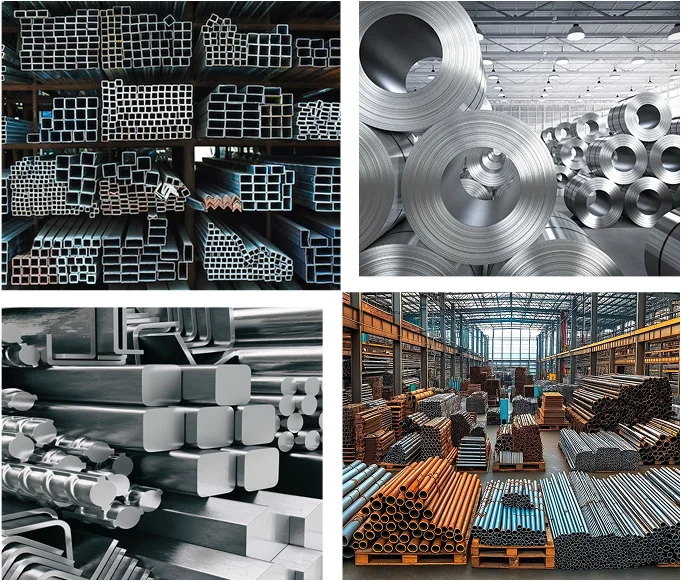
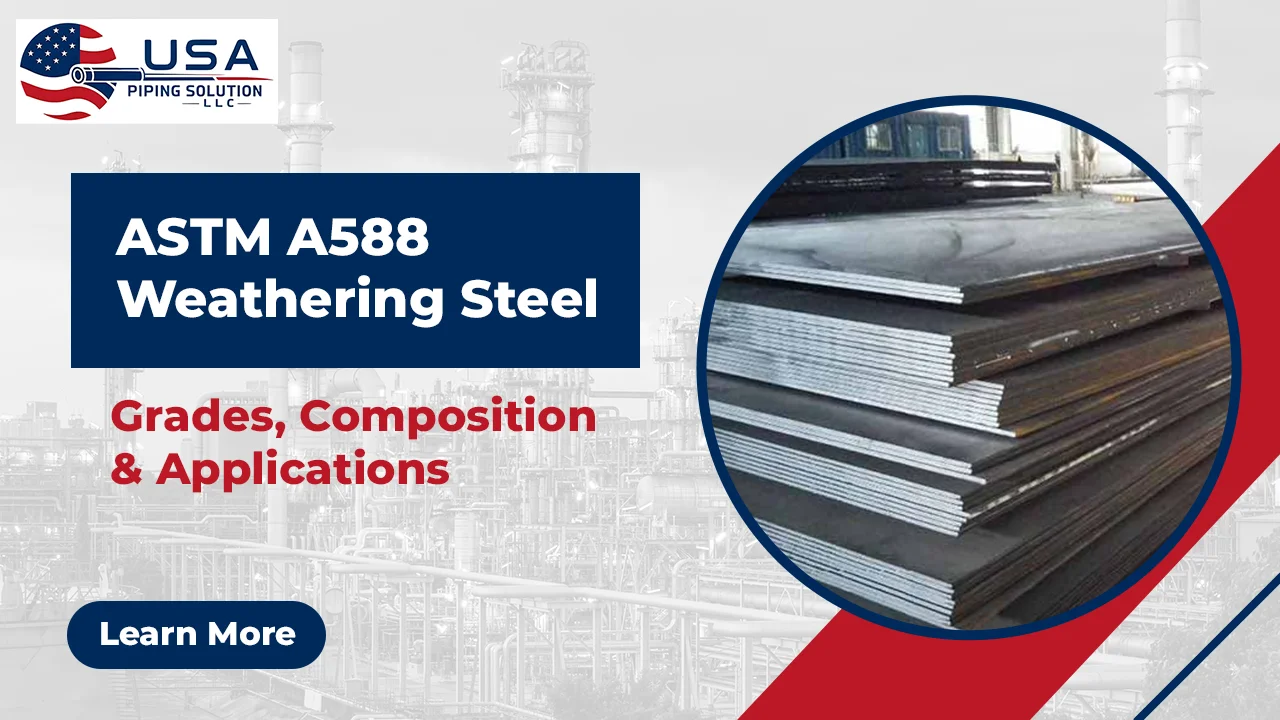
ASTM A588 steel is a high-strength low-alloy structural steel built for welded bridges, building frames, and outdoor structures. It achieves atmospheric corrosion resistance through specific alloying additions, copper, chromium, and nickel, that allow a stable oxide layer to form and protect the underlying steel.
Grade A vs Grade B vs Grade K Chemical Composition
A588 covers three composition grades. Each targets slightly different property and fabrication needs:
|
Element |
Grade A |
Grade B |
Grade K |
|---|---|---|---|
|
Carbon |
0.19% max |
0.20% max |
0.17% max |
|
Manganese |
0.80-1.25% |
0.75-1.35% |
0.50-1.20% |
|
Phosphorus |
0.030% max |
0.030% max |
0.030% max |
|
Sulfur |
0.030% max |
0.030% max |
0.030% max |
|
Silicon |
0.03-0.65% |
0.15-0.50% |
0.25-0.50% |
|
Nickel |
0.40% max |
0.50% max |
0.40% max |
|
Chromium |
0.40-0.65% |
0.40-0.70% |
0.40-0.70% |
|
Copper |
0.25-0.40% |
0.20-0.40% |
0.30-0.50% |
|
Vanadium |
0.02-0.10% |
0.01-0.10% |
Not specified |
|
Molybdenum |
Not specified |
Not specified |
0.10% |
|
Columbium |
Not specified |
Not specified |
0.005-0.05% |
Grade K is differentiated by its molybdenum and columbium additions and has the lowest carbon ceiling at 0.17%, which affects both strength behavior and weld heat input considerations.
Mechanical Properties of ASTM A588 by Plate Thickness
A588 properties are not uniform across thicknesses. This is a genuine differentiator for structural design:
|
Thickness |
Yield Point (ksi) |
Tensile Strength (ksi) |
Min. Elongation (2 in.) |
|---|---|---|---|
|
4 in. and under |
50 |
70 |
21% |
|
Over 4 in. to 5 in. |
46 |
67 |
21% |
|
Over 5 in. to 8 in. |
42 |
63 |
21% |
Density runs approximately 0.282 lb per cubic inch. Brinell hardness falls in the 135 to 170 range. The melting point sits around 2,700 degrees F (1,480 degrees C). These figures make A588 competitive where high-strength carbon steel would be overweight or undersized for the corrosion environment.
ASTM A588 vs A242: What Actually Differs
Both are ASTM weathering steel specifications, but they are not interchangeable without reviewing composition.
- A242 has only one composition type. A588 gives you three grades (A, B, K).
- A242 carries tighter limits on carbon, phosphorus, and sulfur.
- A588 Grade A is generally considered equivalent to Corten A. A242 is more commonly compared to Corten B. See our Corten steel plates page for Corten A and B stock.
- If your spec calls for ASTM A242, do not substitute A588 without an engineering review. They serve similar purposes but are not direct replacements.
Why A588 steel Typically Goes Unpainted
The alloying chemistry in A588 causes the steel to form a tightly adherent oxide layer, a patina, on exposure to moisture and air. This layer slows further corrosion significantly. It is different from ordinary carbon steel, where rust continues inward unchecked.
Galvanizing is technically possible, but most A588 applications skip it entirely. Bridges, utility poles, highway infrastructure, and outdoor building frames using this steel often go unpainted from day one. That cuts lifecycle maintenance costs, which is a real factor in project economics, not just a specification talking point.
Where A588 steel Gets Used
- Bridge girders, decks, and support members
- Building frames, beams, columns, and bracing
- Highway guardrails and related infrastructure
- Utility poles and outdoor structural components
- Railcars and heavy transport fabrications
- Welded, bolted, or riveted structural assemblies
If your project involves structural tube fabrication, our ASTM A847 tubes are worth reviewing alongside A588 plate.
Welding A588 Weathering Steel
Welding A588 steel is done by standard processes. No exotic procedure is required. That said, filler metal selection should match the specific grade, especially for Grade K given its columbium and molybdenum content. Mismatched fillers can create weak zones at the weld joint even when the base metal meets spec. Most fabricators treat A588 like a standard HSLA steel. Preheat requirements depend on thickness and ambient conditions.
ASTM A588 Equivalent Indian Standard
There is no confirmed direct ASTM A588 steel equivalent. Buyers sourcing in India typically compare A588 against IS 8500 weathering grades on a property basis, looking at yield strength and corrosion resistance criteria rather than a one-to-one standard match. If you need a project-specific equivalence assessment, contact USA Piping Solution directly and we can help match ASTM A588 steel properties to your local code requirements.
For stock availability and custom cut lengths, visit our ASTM A588 plates and sheets page or browse the full carbon and alloy steel plates catalog.
Sourcing ASTM A588 Plates and Sheets from Unifit Metalloys
USA Piping Solution stocks and exports ASTM A588 plates and sheets in all three grades, sourced from audited mills, with domestic stock and export capability from our Austin, TX facility. These fall under our broader carbon steel and alloy steel plates inventory.
Whether your project calls for Grade A's general structural weathering performance, Grade B's higher manganese range for added strength, or Grade K's molybdenum-columbium chemistry for specialized fabrication, we can match material to your spec and provide mill test certificates for traceability. For bridge, infrastructure, or outdoor structural work where lead time matters, our Austin facility keeps stock on hand for fast domestic delivery and export documentation for international shipments.
Reach out with your thickness, grade, and quantity requirements, and our team will confirm availability and provide a quote.
Frequently Asked Questions
Is ASTM A588 the same as Corten steel?
A588 Grade A aligns closely with Corten A by composition and weathering behavior. They are not the same standard but are commonly treated as equivalent for structural weathering applications. Confirm with your engineer.
Can A588 plate be used in painted applications?
Yes. A588 can be painted, primed, or coated when the project or environment calls for it. The weathering benefit is the option to go unpainted, not a requirement. Standard surface prep applies.
What thickness range does ASTM A588 cover?
The ASTM A588 specification covers plates up to 8 inches thick. Mechanical properties step down across three thickness bands: up to 4 in., 4 to 5 in., and 5 to 8 in.
Does A588 require special storage to prevent excessive pre-rusting?
Store A588 like standard structural steel. Some initial surface rust before installation is normal and part of patina formation. Avoid prolonged contact with standing water or chloride-rich environments before the patina fully establishes.
Our Blog List
Application Industries
 Boilers
 Heat Exchangers
 Power Plants
 Steam Piping
 Refineries
Drop us a line
We respects customer privacy and ensures absolute confidentiality of any information that is given to us.