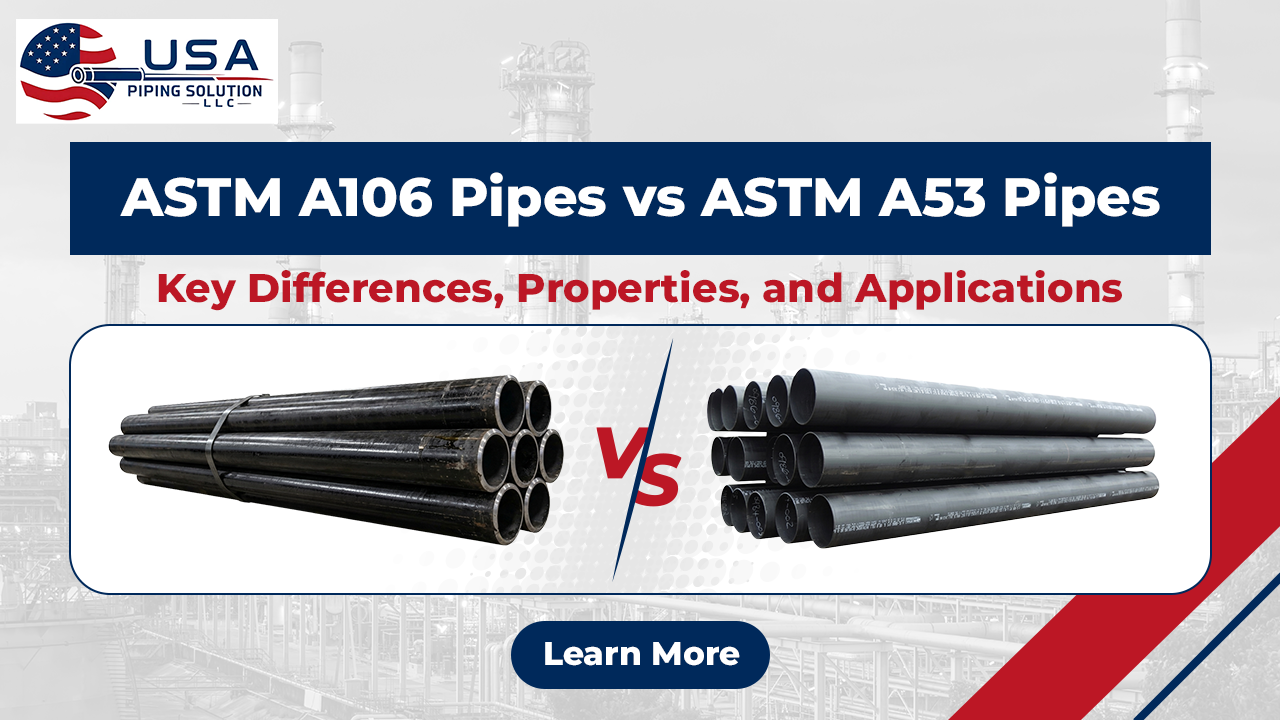
Choosing ASTM A106 vs ASTM A53 when specifying carbon steel pipe to be used in high-temperature or high-pressure service is one of the most significant decisions regarding piping projects made and one of the most misconceived. The two standards continue to be confused by engineers, procurement departments and project managers of critical systems and the ramifications can be traced to failure of inspection and early failure of pipes in the field. The distinction between A53 and A106 pipes is much more than naming: it impacts the performance limits, code compliance, and long-term safety. In this guide you will find information on chemical composition, mechanical properties, grades, pressure handling, temperature handling and real-life applications so that your initial call to specification is correct.
Understanding Each Standard — Scope and Specification Background
What is ASTM A106?
ASTM A106 is a standard published by ASTM international and it is used to state the requirements of smooth carbon steel seamless pipes that are used under high temperature conditions of service. It consists of Grade A, B and C, but Grade B is the most specified as it offers a minimum yield strength of 35,000 psi and tensile strength of 60,000 psi meeting the majority of ASME B31.1 and B31.3 process piping requirements. They are typically employed in the refineries, boilers, heat exchangers and high-pressure steam lines, where high temperatures and pressure stability are of utmost importance. The standard of this includes NPS 1/8 to NPS 48 sizes and wall thickness per ASME B36.10M. Its capacity to handle temperatures up to approximately 1000°F (538°C) per ASME allowable stress tables that make it suitable for intense industrial environments.
What is ASTM A53?
ASTM A53 is a black and hot-dipped galvanized steel pipe, and it comes in seamless and welded, which makes it more applicable in general purposes. It consists of Grades A and B, as well as three types of manufactures, which are Type S (seamless), Type E (electric resistance welded), and Type F (furnace butt welded). ASTM A53 Pipes find application in mechanical structures, construction frameworks, low-pressure fluid and gas transportation systems and fire sprinkler systems. A practical procurement advantage: many A53 Grade B pipes are dual-certified to ASTM A106 Grade B, allowing a single material to satisfy both specifications—useful when project requirements overlap. It is worth mentioning however that Type F pipes cannot be bent, flanged or otherwise formed in the same way so their application is restricted to applications that require a lot of fabrication.
Side-by-Side Technical Comparison — Chemical Composition
The ASTM A106 and ASTM A53 are made up of different materials and the details about its chemical composition is given below.
Element |
ASTM A106 Grade B |
ASTM A53 Grade B |
|---|---|---|
Carbon (C) |
Max 0.30% |
Max 0.30% |
Manganese (Mn) |
0.29% – 1.06% |
Max 1.20% |
Phosphorus (P) |
Max 0.035% |
Max 0.05% |
Sulfur (S) |
Max 0.035% |
Max 0.045% |
Silicon (Si) |
Min 0.10% (Mandatory requirement) |
Not specified / No minimum requirement |
Mechanical Properties of ASTM A106 vs ASTM A53 Pipes Comparison
The comparison between ASTM A106 vs ASTM A53 Pipes include mechanical properties including many properties about the material such as tensile strength, yield strength, pressure & temperature and testing.
Yield Strength and Tensile Strength
Mechanical properties of ASTM A106 Grade B and ASTM A53 Grade B have some mechanical strengths such as specifying that there should be a minimum yield strength of 35,000 psi (241 MPa) and tensile strength of 60,000 psi (414 MPa) at room temperature between the two. However, the main distinction between them is their temperatures whereby the ASME B31.3 and B31.1 permissible stress reduce with temperature whereas ASTM A106 functions better in high temperature environment. This guarantees that A106 is a better substitute to ASTM A53, and it will be utilized in high-temperature.
Pressure and Temperature Performance
ASTM A106 is used in high-pressure and high-temperature environments, such as systems with constant changes of heat and pressure. Conversely, ASTM A53 is typically low to moderate pressure and is typically not suggested above 250°F (121°C). As an illustration, A106 will work best in a steam header system as it can endure thermal stress and pressure and the A53 will eventually break down. To ensure this difference, engineers usually use the ASME pressure-temperature ratings.
Hydrostatic and NDE Testing Requirements
ASTM A106 can be tested by hydrostatic test or non-destructive testing (NDE) depending on the need of the project which is more flexible. ASTM A53, conversely, is that type of pipes where hydrostatic testing is mandatory and guarantees minimum pressure strength. Practically, A53 is less demanding on standard projects whereas A106 is used in important projects where special testing procedures are required due to reliability.
Need help selecting the right pipe grade for your project? Browse our ASTM A106 Grade B seamless pipe range or explore our ASTM A53 seamless pipe options, both stocked with full MTR documentation.
Grade Breakdown — A106 Grade A, B, C vs A53 Grade A, B
Countries all over the world use different grades according to their usage and the information about them is given below.
A106 Grade A vs Grade B vs Grade C
ASTM A106 pipes are available in Grade A, B and C depending on the strength level. The lowest strength is Grade A and it is hardly ever utilized in present day projects. The most specified grade is Grade B which is used as the industry standard in oil and gas, petrochemical and power plants because of its balanced strength and availability. Grade C is the strongest and most expensive, and finds application in high pressure and boiler applications but is not very common due to the high cost and low demand. In the majority of practice scenarios, Grade B is an appropriate choice because it fits most of the industrial needs.
A53 Grade A vs Grade B — And Why Grade B Dominates
ASTM A53 comes in Grade A and Grade B, of which Grade B is more widely used. Grade A is less strong and can be used in tasks such as bending, coiling and fire sprinkler systems. Grade B, however, is stronger and is commonly employed in structural, mechanical and fluid transport.
A key benefit is dual certification, in which pipes of A53 Grade B frequently have certification to ASTM A106 Grade B. This enables the same pipe to suit various applications and this gives the procurement teams more flexibility and the complexity in selecting material is reduced.
Manufacturing Process — Seamless vs Welded and Why It Matters
One of the most significant differences between these two standards is the manufacturing approach. ASTM A106 Pipes are also seamless meaning that they do not have any weld joint and therefore the strength is not concentrated at the joint. This adds to their suitability in processes that require high pressure and high temperatures and where reliability is paramount.
Conversely, the ASTM A53 pipes may either be seamless or welded, and either of the ERW (Type E) or furnace welded (Type F). Longitudinal seam is present in welded pipes forming a heat-affected zone (HAZ) which is also weaker in extreme conditions.
This is why in ASTM A53 vs. ASTM A106, A106 is elected to the critical industrial systems, whereas A53 (in particular, ERW) is typically employed in the structural and low-pressure applications.
Application Guide — Which Standard to Specify and When
When to Use ASTM A106
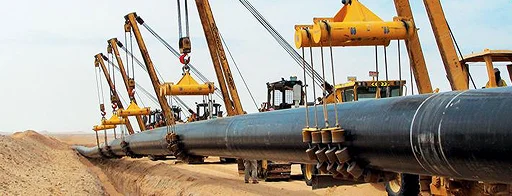
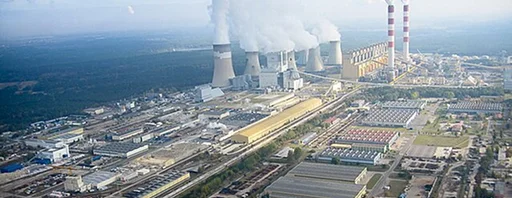
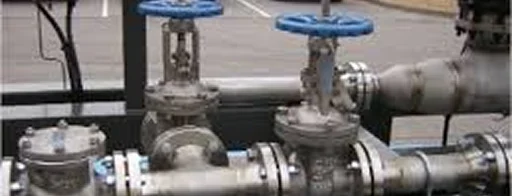
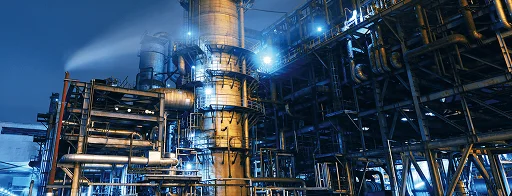
ASTM A106 is the ideal choice in the cases when it is important to have high temperature, high pressure, and reliability. Its application is common in chemical industries, refineries, and power plants where piping systems work with high temperatures. It is also used in steam lines, boiler systems and high pressure fluid pipelines which demand uniform strength. ASTM A106 can be frequently used in the projects, which are controlled by ASME B31.1 and B31.3 codes because of its capacity to address thermal stress. It can also be applied to offshore and undersea projects where the pipes experience a constant change in temperature and pressure.
When to Use ASTM A53
ASTM A53 can be used in general purpose, low-pressure situations, which are not related to extreme conditions. It is usually applied in water, gas and low pressure steam pipelines, structural and mechanical applications such as columns and supports. It is also commonly used in fire sprinklers that are NFPA standards. ASTM A53 is a cheaper alternative in projects in which price is a major consideration. It is also good in galvanized pipes, as it allows hot-dip galvanizing, unlike the ASTM A106.
Industry-Based Usage
In practice, ASTM A106 is used in industries that require it to operate at a high pressure and temperature such as oil and gas and power generation industries. ASTM A53, in its turn, is typically applied to municipal water systems and HVAC uses, where lower pressure and temperature levels are needed and cost-effectiveness matters.
Cost and Availability — Procurement Considerations
In terms of procurement, Grade B ASTM A106 usually costs 5–15 percent higher than Grade B ASTM A53, primarily because of its smooth production and high thermal capacity. In order to streamline inventory, most purchasers use the dual certified (A53 + A106 Grade B) pipes, so one material can fit both definitions. Availability wise, A106 seamless pipes of larger sizes (above NPS 12) can experience long lead times, which can affect the time lines of a project. Both standards need Mill Test Reports (MTRs), but in A106 the traceability requirements are usually more rigorous and particularly in critical applications third-party inspection and PMI (Positive Material Identification) may also be mandated to verify compliance and reliability.
Common Mistakes While Choosing Between ASTM A106 vs ASTM A53
Substituting A53 for A106 in high-temperature service
Using ASTM A53 instead of A106 without proper review can lead to failure under heat and pressure. Always validate material selection for thermal applications.
Assuming dual-certified pipe is always acceptable
Not all project specifications allow substitution. Always check the contract or piping spec before using dual-certified material.
Overlooking Type F limitations in A53
A53 Type F pipes are not suitable for bending or forming. Ignoring this can create fabrication and installation issues.
Ignoring NDE requirements when switching pipe types
Replacing seamless with ERW without proper inspection can increase the risk of defects. Always match testing requirements to application criticality.
Not specifying heat number traceability for A106
Missing traceability can lead to compliance issues in critical systems. Proper documentation is essential for quality assurance.
Applicable Codes and Standards
ASTM A106 and ASTM A53 are two types of materials and it is important to learn about important codes and standards. ASTM A106 Grade B is popular in high-temperature and high-pressure applications of ASME B31.1 (Power Piping) and in ASME B31.3 (Process Piping), Grade A106 or Grade A53 may be used, although temperature restrictions tend to favor A106. One should also not mix API 5L that is applied to oil and gas pipelines with A106 that is applied in process piping. Other standards such as NACE/ISO 15156 introduce additional material requirements in case of corrosive or sour service. The IBR (Indian Boiler Regulations) also forms an important part in India where ASTM A106 Grade B is widely recognized in boiler and steam jobs.
Conclusion
In the majority of applications of high-temperature and high-pressure industrial applications—refineries, power plants, steam systems—ASTM A106 Grade B seamless pipe is the appropriate choice. In situations where the budget is tight and operating conditions moderate, ASTM A53 Grade B can be offered as an economical option most likely in structural, water, and low-pressure gas service. In any case, use a dual-certified pipe guaranteeing you the compliance coverage of both without a more complex supply chain. To ensure that you have the correct grade or thickness of the wall you use on your project, call our technical department. USA Piping Solutions provide the high-quality of ASTM A106 and ASTM A53 pipes and other material that you can use according to your requirements.
Frequently Asked Questions (FAQ)
What is the difference between ASTM A106 vs ASTM A53 pipes?
ASTM A106 is seamless and designed for high-temperature, high-pressure service, while ASTM A53 can be seamless or welded and is mainly for low to moderate pressure applications.
Can ASTM A53 be used instead of ASTM A106 in high-temperature applications?
No. ASTM A53 is not rated for high temperatures, so substituting it for A106 in steam or boiler lines can cause failure.
What are the chemical and mechanical differences between A106 and A53 Grade B?
A106 has tighter chemical limits (lower P & S, minimum silicon) and is tested for high-temperature strength, whereas A53 allows slightly higher impurities and is less suitable for thermal cycling.
Is ASTM A53 dual-certified with ASTM A106?
Yes, some A53 Grade B pipes are dual-certified with A106 Grade B, allowing them to meet both specifications where allowed by project requirements.
What is the price difference between A106 and A53 pipes?
ASTM A106 Grade B typically costs 5–15% more than A53 Grade B due to seamless manufacturing and high-temperature suitability.
Our Blog List
Application Industries
 Boilers
 Heat Exchangers
 Power Plants
 Steam Piping
 Refineries
Drop us a line
We respects customer privacy and ensures absolute confidentiality of any information that is given to us.