.webp)
In the high-stakes world of industrial piping, material selection is rarely a simple checkbox exercise. For engineers designing systems for deepwater offshore platforms, aggressive chemical processing plants, or ultra-supercritical power stations, a misstep in alloy specification does not merely result in increased maintenance costs—it can lead to catastrophic containment failure, millions of dollars in lost production, and severe safety incidents.
The term "corrosion resistance" is often used too broadly. A material that is impervious to general oxidation may succumb rapidly to pitting corrosion in chloride-rich environments or suffer stress corrosion cracking (SCC) under tensile load. Furthermore, in power generation applications, the primary threat shifts from aqueous corrosion to thermal creep and high-temperature oxidation.
This guide provides a technical framework for selecting Corrosion-Resistant Alloys (CRAs). We will analyze the specific performance envelopes of Super Duplex, Monel, Copper-Nickel, and high-temperature Chrome-Moly alloys, focusing on parameters like Pitting Resistance Equivalent Number (PREN), creep rupture strength, and galvanic compatibility.
Why Material Selection Is More Critical Than Ever
The operating conditions for modern industrial infrastructure are becoming increasingly hostile. Offshore exploration has moved into deeper waters with higher pressures and "sour" (H2S-rich) reservoirs. Chemical plants are running processes at higher temperatures to maximize yield. Consequently, the margin for error in material selection has vanished.
Regulatory bodies, including API and NACE (now AMPP), have tightened standards regarding sulfide stress cracking and material hardness limits. While high-performance alloys like Super Duplex or Monel command a higher initial capital expenditure (CAPEX) than carbon steel, the lifecycle cost analysis almost always favors the alloy that eliminates the need for corrosion inhibitors, frequent inspections, and premature replacement. The engineering challenge lies in selecting an alloy that is robust enough to survive the environment without "gold-plating" the project with unnecessarily expensive materials.
Key Corrosion Mechanisms to Understand
Before selecting a grade, engineers must identify the specific corrosion mechanism threatening the system:
- Pitting Corrosion: Localized attack causing deep holes in the metal, common in chloride environments (seawater). This is often the primary failure mode for stainless steels.
- Crevice Corrosion: Occurs in confined spaces (under gaskets, bolt heads, or deposits) where the solution becomes stagnant and acidic.
- Stress Corrosion Cracking (SCC): The sudden cracking of a metal caused by the combined effects of tensile stress and a corrosive environment (typically chlorides or H2S).
- Erosion-Corrosion: Accelerated degradation due to the relative movement of corrosive fluid against the metal surface, a critical factor in pipe bends and pump discharges.
- High-Temperature Creep: The time-dependent deformation of material under stress at elevated temperatures, critical for boiler and steam piping.
Engineering Insight: The PREN Formula
The Pitting Resistance Equivalent Number (PREN) is the standard metric for comparing the resistance of
stainless steels to pitting in chloride environments. The formula typically used is:
PREN =
%Cr + 3.3(%Mo) + 16(%N)
Note the heavy weighting of
Nitrogen (N) and Molybdenum (Mo). A PREN > 40 is generally required for seawater service, distinguishing
"Super Duplex" from standard Duplex grades.
The CRA Selection Matrix by Operating Environment
Seawater & Marine Environments
Seawater is aggressively corrosive due to high chloride content, biological activity, and dissolved oxygen. Copper Nickel 70/30 (UNS C71500) is the historical standard for naval and commercial marine piping. It offers natural biofouling resistance (preventing marine growth) and good corrosion resistance, though it is velocity-limited.
For systems with higher flow velocities or those requiring higher strength, Monel 400 (UNS N04400) is superior. It resists erosion-corrosion significantly better than copper-nickel and is immune to chloride-induced stress corrosion cracking. However, for high-pressure subsea systems where weight is a concern, Super Duplex stainless steels are often the preferred choice due to their high strength-to-weight ratio.
Offshore Oil & Gas
The offshore sector demands materials that can handle high pressure, chlorides, and often H2S. Super Duplex S32750 has become the industry workhorse for topside piping, firewater systems, and subsea umbilicals. Its dual-phase microstructure provides yield strength roughly double that of austenitic stainless steel.
For even more aggressive environments, Super Duplex S32760 is specified. The addition of tungsten (W) enhances its pitting and crevice corrosion resistance. Both grades fall under the broader category of, which are essential for minimizing platform weight while maximizing service life. Super Duplex Steel Pipes & Tubes are now standard for seawater lift pumps and produced water lines.
Chemical Processing
In chemical plants, the threat often comes from specific acids rather than general environmental chlorides. Monel 400 is virtually standard for handling Hydrofluoric Acid (HF) at all concentrations and temperatures, a service where most stainless steels would dissolve rapidly. It also performs exceptionally well in caustic alkalis and reducing salts.
For mixed acid streams containing chlorides, Super Duplex alloys provide a balanced solution, resisting both the acid corrosion and the potential for chloride stress cracking that might affect standard 316L stainless piping.
High-Temperature Power Generation & Refineries
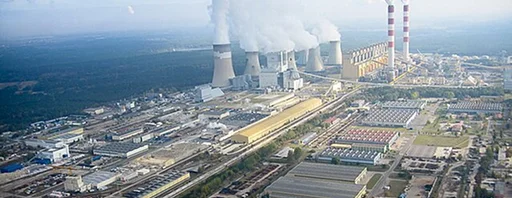
Here, the concern shifts from aqueous corrosion to thermal stability. ASTM A213 T23 Tubes are widely used in ultra-supercritical boilers. T23 is a tungsten-strengthened alloy (2.25Cr-1.6W-V-Nb) that offers superior creep rupture strength compared to traditional T22, allowing for thinner walls and better thermal fatigue life.
For main steam lines and headers operating at the highest temperatures, ASTM A335 P91 Pipes (9Cr-1Mo-V) are the global standard. P91 possesses exceptional creep strength up to 600°C (1112°F), making it indispensable for modern high-efficiency power plants.
Understanding PREN and Why Super Duplex Leads
In chloride-rich environments, pitting is the enemy. The Pitting Resistance Equivalent Number (PREN) gives engineers a quantifiable way to rank alloys. Standard 316L stainless steel has a PREN of roughly 24. Standard Duplex (2205) sits around 34.
To qualify as "Super Duplex," an alloy must typically achieve a PREN > 40. This threshold is significant because it marks the point where the alloy becomes resistant to pitting in seawater at ambient and elevated temperatures.
|
Alloy Category |
Typical Grade |
Typical PREN |
Chloride Tolerance |
Typical Max Temp (Aq.) |
|---|---|---|---|---|
|
Austenitic SS |
316L |
24 |
Low |
60°C |
|
Duplex SS |
2205 (S31803) |
34 |
Medium |
100°C |
|
Super Duplex |
S32750 / S32760 |
> 40 |
Very High |
150°C+ |
|
Super Austenitic |
6Mo (S31254) |
> 42 |
Very High |
150°C+ |
Super Duplex: S32750 vs S32760 — When to Choose Which
Engineers frequently ask whether to specify UNS S32750 (Alloy 2507) or UNS S32760 (Zeron 100). Both are Super Duplex grades with roughly 25% Chromium and 7% Nickel, but their minor alloying elements create distinct performance profiles.
|
Feature |
UNS S32750 (2507) |
UNS S32760 (Zeron 100) |
|---|---|---|
|
Key Additions |
High Nitrogen |
Tungsten (W) & Copper (Cu) |
|
Corrosion Focus |
General Seawater |
Sour Service & Acidic Chlorides |
|
PREN Value |
41-43 |
41-43 (Often slightly higher) |
|
Application |
Umbilicals, Heat Exchangers |
Subsea Pipework, Firewater Systems |
|
Availability |
Widely Available |
Project Specific (Slightly scarcer) |
S32760 contains copper, which improves resistance to reducing acids (like dilute sulfuric acid). The tungsten addition aids in pitting resistance. However, for most standard seawater applications, S32750 is equally sufficient and sometimes easier to source.
Monel 400 — The Benchmark for Seawater and HF Acid
Monel 400 is a solid-solution alloy of nickel (approx. 67%) and copper (approx. 30%). It holds a unique position in materials engineering because it offers excellent corrosion resistance in both reducing and oxidizing environments, although it is generally better in reducing media.
In marine applications, Monel 400 is renowned for its immunity to chloride-ion stress corrosion cracking—the Achilles' heel of stainless steels. It resists corrosion in flowing seawater up to velocities of 10-15 ft/s. However, it can be susceptible to pitting in stagnant seawater, so it is best used in pumps, valves, and active piping systems rather than static ballast tanks.
Its most critical industrial application, however, is in alkylation units in refineries, where it handles Hydrofluoric (HF) acid. Few other alloys can withstand the aggressive nature of HF acid at high temperatures.
Copper Nickel 70/30 — Cost-Effective Marine Workhorse
While less expensive than Monel, Copper Nickel 70/30 is a step up from the 90/10 grade. The increased nickel content provides better resistance to erosion-corrosion and higher strength.
Its defining feature is biofouling resistance. Copper ions released from the surface prevent barnacles and mussels from attaching to the pipe wall. This reduces the need for chlorination systems in seawater intakes. It is the material of choice for desalination plant tubing and marine condensers where flow velocities are controlled (typically under 3-4 m/s to prevent erosion).
High-Temperature Alloys for Power Plants
In the power sector, efficiency is driven by temperature. Higher steam temperatures require materials that resist creep—the tendency of metal to slowly deform under load over time.
- ASTM A213 T23: This grade fills the gap between the low-alloy T22 and the high-alloy P91. By adding tungsten, T23 achieves nearly double the creep rupture strength of T22 at 550°C. It is weldable without post-weld heat treatment (PWHT) in certain thicknesses, making it ideal for field repairs in waterwall panels.
- ASTM A335 P91: This modified 9-Chrome alloy is critical for main steam piping. Its high creep strength allows for thinner walls, which in turn reduces thermal stresses during plant startup and shutdown cycles. However, P91 requires rigorous fabrication controls, including precise pre-heat and PWHT, to maintain its microstructure.
Matching Flanges to CRA Piping Systems
A piping system is only as robust as its connections. When using CRA pipes, the flanges must match the metallurgy to prevent galvanic corrosion or weak points.
- For Super Duplex lines, flanges should be solid Super Duplex or clad with the same alloy.
- For high-strength carbon steel pipelines that utilize CRA internal cladding, ASTM A694 F65 Flanges are often the base material. These high-yield flanges (65 ksi minimum yield) match the mechanical strength of high-pressure pipe grades (like API 5L X65) while the internal cladding handles the corrosion.
- For low-temperature environments where impact toughness is key, ASTM A350 LF2 Flanges are the standard carbon steel backing material, often weld-overlaid with Inconel 625 or Monel for the sealing face.
Cost vs Performance Trade-offs
The "Material Cost Pyramid" places carbon steel (like Q195) at the base, followed by stainless 304/316, Duplex, Super Duplex, and finally nickel alloys like Monel at the peak.
However, the purchase price is deceptive. A carbon steel system in a wet sour gas environment might require continuous inhibitor injection (OPEX) and replacement every 5 years. A solid Super Duplex system might last 25 years with zero maintenance. In offshore environments where the cost of intervention is astronomical (requiring dive support vessels), the high upfront cost of CRA materials like S32750 or Monel 400 is almost always justified by the lifecycle savings.
The Material Selection Decision Tree
When specifying piping for critical service, follow this logic flow:
- Define the Environment: Is chlorides the main threat (seawater)? Is H2S present (sour service)? Is it a specific acid (HF, H2SO4)?
- Determine Design Pressure: High pressures favor high-strength alloys like Super Duplex to reduce wall thickness and weight.
- Check PREN Requirements: If seawater is present, target PREN > 40 (Super Duplex or 6Mo).
- Evaluate Temperature: Above 300°C, Duplex grades risk embrittlement. Switch to Austenitic stainless or Chrome-Moly (P91/T23) for creep service.
- Fabrication Feasibility: Can the alloy be welded in the field? P91 requires heat treatment; T23 may not. Super Duplex requires strict heat input controls.
- Lifecycle Cost Analysis: Compare CAPEX + 20-year OPEX for Carbon Steel + Inhibitors vs. Solid CRA.
- Verify Code Compliance: Consult NACE MR0175 / ISO 15156 for sour service limits on hardness and chlorides.
Related Guide: Manufacturing Methods
Most CRA alloys are available in both seamless and welded forms. For guidance on which manufacturing method suits your application, read our comprehensive guide: Seamless vs. Welded Pipes & Tubes: Key Differences, ASTM Standards, and How to Choose Right.
Material selection is an engineering optimization problem, not a "best material" contest. Each alloy, from the robust ASTM A335 P91 to the corrosion-defying Monel 400, possesses a specific service envelope where it excels. Using a material outside that envelope—whether by under-specifying for cost or over-specifying out of caution—introduces risk.
By understanding the interplay between corrosion mechanisms, mechanical properties, and fabrication constraints, engineers can design piping systems that are safe, compliant, and commercially viable for the long haul.
Our Blog List
Application Industries
 Boilers
 Heat Exchangers
 Power Plants
 Steam Piping
 Refineries
Drop us a line
We respects customer privacy and ensures absolute confidentiality of any information that is given to us.