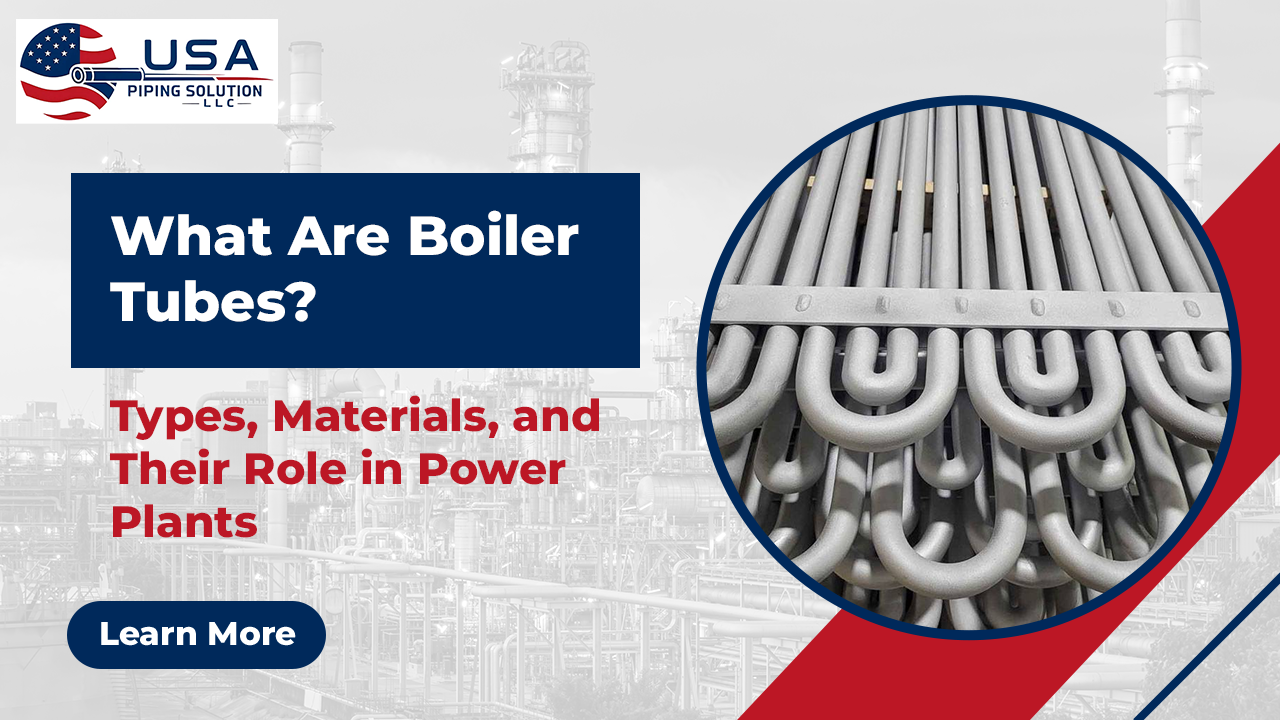
Boiler tubes are welded or seamless tubular elements that are used to withstand high pressure and high temperature in generating steam. Boiler tubes are widely used in power plants, refineries, and industrial boilers to transfer heat between the combustion gases and water to generate steam to be used to produce power and industrial processes.
The pressure and temperature conditions of different parts of a boiler are different and understanding the types of boiler tubes is important in designing a boiler system. The engineers are also required to choose appropriate boiler tube materials such as carbon steel, alloy steel, or stainless steel grade mentioned in the ASTM and ASME standards to be able to guarantee durability, heat resistance, and safe long-term functioning. This guide describes the key types of tubes, commonly specified material grades, and their location in an industrial boiler system.
What Are Boiler Tubes and How Do They Function in a Boiler System?
Boiler tubes are heat transfer devices that are placed within industrial boilers to transform the thermal energy in the combustion gases to steam. These tubes constitute the primary heat-exchange surface in power plants and process boilers in which water receives the heat and converts to high-pressure steam to either generate power or industrial processes. The boiler tubes are required to be engineered to operate safely and efficiently in ephemeral high temperature and high pressure environments and this demands the tubes to be fabricated with the right measurements and appropriate materials.
How Boiler Tubes Transfer Heat (Process Overview)
It has hot combustion gases passing around the tube surface and water or steam flow within the tubes, boiler tubes conduct heat. The heat is conducted through the wall of the tube and the water contained in it absorbs the thermal energy and slowly changes into steam. This is the continuous transfer of heat that enables efficient generation of steam by the boilers. Boiler tubes are heat transfer devices that are fitted in industrial boilers to transform the thermal energy of the combustion gases into steam. These tubes are commonly used as the first heat exchanger in a power plant. The process involves absorbing heat from water and becoming high-pressure steam that drives the generation of power or powers industrial processes. That’s why it’s important to use accurate dimensions and appropriate materials to make them safe and efficient in their use.
Key Differences Between Boiler Tubes and Boiler Pipes
The boiler tubes are commonly used in heat exchanger structure, whether the boiler pipes are used to transfer water and heat into different components. Some of the most common differences between them are given below.
Feature |
Boiler Tubes |
Boiler Pipes |
|---|---|---|
Main Function |
Heat transfer within the boiler |
Fluid or steam transport between components |
Diameter |
Usually smaller |
Typically larger |
Application |
Water walls, superheaters, economizers |
Steam lines and feedwater piping |
Measurement |
Measured by Outside Diameter (OD) and Wall Thickness (BWG) |
Measured by Nominal Pipe Size (NPS) and Schedule (Wall Thickness) |
Precision |
Requires high precision for fitting into tube sheets |
Focus is on volume and pressure containment |
Operating Conditions: Pressure, Temperature, and Flow Requirements
Boiler tubes work in harsh conditions, typically up to 400–600°C and high internal pressure. The water or steam flow through the tubes is also continuous in order to maintain the same amount of heat transfer and avoids overheating. These operating conditions need proper material selection and tube sizing in order to manage them safely.
Types of Boiler Tubes: Fire Tube vs. Water Tube and Beyond
It is essential to know the various forms of boiler tubes and then choose the appropriate tube design to suit various sections of the boiler. Boilers have different pressure and temperature conditions, and thus, different tube forms are used in different industries to control the heat flow and steam production. These are most commonly in forms of fire tube, water tube, superheater, reheater, economiser and membrane wall tubes, all playing a particular role in power plants and industrial boilers.
Fire Tube Boiler Tubes
Fire tube boilers are tubes filled with hot combustion gases which are transported through the tubes and water surrounds the tubes. The heat is transmitted through the tube wall and turns the surrounding water into steam. The tubes are primarily utilized in different industries, as well as low to medium-pressure boilers used in smaller systems.
Water Tube Boiler Tubes
The water tube boilers have tubes that are filled with water and hot gases are released around the tubes. Such a design enables it to operate at higher pressure and temperature levels and this makes water tube boilers prevalent in power plants and large-scale industries.
Superheater, Reheater and Economiser Tubes
Superheater tubes elevate the temperature of steam before it goes to turbines. In turbines, to ensure efficiency, reheater tubes warm up steam that has been partially expanded. Economiser tubes are used to harvest used exhaust gas heat used to preheat boiler feedwater to enhance energy saving.
Membrane Wall (Fin) Tubes
The modern boilers are made of membrane wall tubes with tubes that are joined with steel fins to make a continuous wall. They absorb the bright heat in the combustion chamber and enhance the efficiency of the boilers.
Boiler Tube Materials: ASTM and ASME Grades Explained
When choosing appropriate boiler tube material to use, a consideration of high pressure, temperature and corrosion in industrial boilers is crucial. Boiler tubes are normally specified by engineers based on ASTM and ASME guidelines so as to ensure appropriate strength, creep resistance and long life performance. The typical materials are carbon steel, alloy steel and the stainless steel grades which are applied in various parts of the boilers.
Carbon Steel Boiler Tubes (A192, A210)
Boilermaking in low-temperature to medium-temperature boilers are carried out with carbon steel. ASTM A192 is most commonly used in seamless service at high pressure and ASTM A210 offers a little extra strength in water wall and economizer tubes.
Alloy Steel Boiler Tubes (T11, T22, T91 — ASTM A213)
The alloy steel pipes are made with chromium and molybdenum, which help to increase the heat and creep resistance of the material. This material comes in different grades, like ASTM A213 T11 and T22 is used for superheaters and reheaters. On the other hand, the T91 and ASTM A335 P91 are used for high temperature structures above 550°C.
Stainless Steel Boiler Tubes (TP304H, TP316H)
The stainless steel boiler tubes are mostly used in different industries according to their needs. It comes in different grades, such as ASTM A213 TP304H and TP316H, which provide a high resistance against oxidation, corrosion, and scaling. These stainless steel tubes are commonly used in high-temperature and corrosive boilers.
Chrome-Moly vs Stainless
T11, T22, T91 are chrome-moly alloy steels, which are used to provide high pressure and high temperature service in steam. When corrosion and oxidation resistance is of greater importance, the stainless steel grades (TP304H, TP316H) are defined.
ASTM / ASME Grade |
Composition |
Max Temp |
Pressure Rating |
Typical Application |
|---|---|---|---|---|
ASTM A192 |
Carbon Steel |
approx 425°C |
Medium–High |
Industrial boiler tubes |
ASTM A210 |
Medium Carbon Steel |
approx 450°C |
High |
Water wall, economizer |
ASTM A213 T11 |
Cr-Mo Alloy Steel |
approx 540°C |
High |
Superheater tubes |
ASTM A213 T22 |
Cr-Mo Alloy Steel |
approx 565°C |
Very High |
Reheater sections |
ASTM A213 T91 / A335 P91 |
9Cr-1Mo Alloy Steel |
approx 600°C+ |
Ultra High |
Power plant boilers |
ASTM A213 TP304H / TP316H |
Stainless Steel |
approx 600°C |
High |
Corrosion-resistant boilers |
How Are Boiler Tubes Manufactured?
Boiler tubes are manufactured in a series of steps in order to guarantee its quality, strength, and durability. The following is a step-by-step analysis:
Selection of Raw Material
The coils or billets of steel of high quality are selected depending on the specifications needed of the boiler tubing.
Forming
Raw material is subjected to heating and extrusion or rolling is done to produce hollow cylindrical shaped forms.
Cold Drawing or Hot Rolling
The formed tubes are cold drawn or hot rolled in order to have accurate dimensions and finished surfaces.
Heat Treatment
To enhance the resistance to high pressure and temperature, the tubes are subjected to heat treatment procedures such as annealing, normalizing, or quenching in order to enhance the mechanical properties.
Non-Destructive Testing
Non destructive testing (NDT) techniques, like ultrasonic testing, eddy current testing, or hydrostatic testing are used to inspect boiler tubes in order to ensure quality of products.
Cutting and Finishing
The tubes are cut to the necessary length, and the surface finishing processes are applied to the tubes to increase the corrosion resistance.
Test and Certification
Lastly, the boiler tubes are also checked and approved to fit the industry requirements such as the ASME, ASTM or the DIN.
Industrial Boiler Tubes: Applications Across Power Plants, Refineries, and Petrochemical Plants
Different industries utilize industrial boiler tubes in operations that involve the use of steam to generate heat and transfer the heat. The type of tube and materials used would be determined by pressure, temperature, and corrosive environment. These operating conditions are met by the different boiler tube configurations used by power plants, refineries, and process industries.
Power Generation
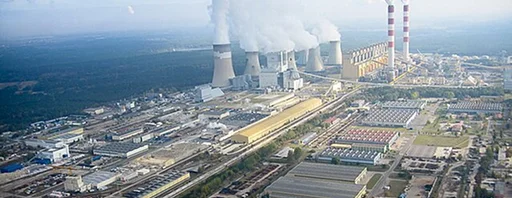
Power plant boilers are run under high pressure and temperature. ASTM A192 or A210 is used in subcritical systems, whilst high-strength alloy grades like ASTM A213 T22 or T91 are used in supercritical and ultra-supercritical boilers to enhance creep resistance.
Refinery and Petrochemical
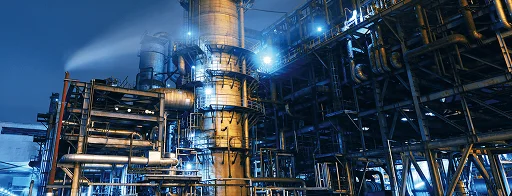
Refineries employ high heat boiler tubes and corrosive gases. To avoid corrosion, stainless and alloy steels are used, e.g. TP304H or TP316H. Heat recovery and process heating is also done in boiler heat exchanger tubes in many refinery systems.
Industrial Paper, Cement and Chemical Plants
They are found in paper mills, cement plants, and chemical industries, and generally run at medium pressure. Water walls, economisers, and general steam generation are usually made of carbon steel tubes of ASTM A192 and A210.
How to Select the Right Boiler Tube: Engineering Criteria and Procurement Checklist
Choosing the right boiler tubes depends on different operating conditions, material characteristics, and industry standards. The detailed information on which factors to look for while choosing the best boiler tubes according to your industry.
Operation Temperature and Pressure Envelope
Tubes in a boiler are required to deal with pressure and temperature at a boiler section where the tubes are installed. Moderate conditions have been met with carbon steel grades of ASTM A192 and A210, whereas the high-temperature parts need alloy steels like ASTM A213 T11, T22 or T91.
Oxidation Environment and Corrosion
Stainless steel alloys (TP304H or TP316H) usually are used in the corrosive or high-oxidation conditions. Such materials are more resistant to corrosion and scaling thereby increasing tube service life.
Requirements in Code Compliance
Boiler tubes should also be in line with the ASME Boiler and Pressure Vessel Code (BPVC) and other ASTM standards. Conformance is the assurance of the material to meet the necessary pressure ratings and safety requirements.
Dimensional Standards
Engineers also check the outer diameter (OD), wall thickness, and tube length of the boiler. Proper dimensions are also valued in correct fitting of installation, heat transfer performance, as well as mechanical strength.
Boiler Tube Failure Modes and Maintenance Considerations
Boiler tubes are under the pressure and heat, therefore, frequent check up and maintenance are essential to ensure the safe operation of boilers. Tubes may be damaged with time by heat, corrosion, and mechanical stress. Effective monitoring and maintenance will assist in avoiding the unforeseen failure and enhance the life of the boiler system.
Typical Boiler Tube Failure Causes
Boiler tube failures can be either as a result of overheating, erosion, or corrosion. The problem of overheating may occur due to low water flow or the appearance of scale in the tube. When tubes are exposed to chemicals, oxygen or corrosive gases, corrosion and pitting may also develop.
Boiler Tube Inspection Techniques
Non-destructive testing (NDT) is applied in the inspection by maintenance teams on boiler tubes. The ultrasonic testing (UT) and radiographic testing (RT) techniques are used to identify the cracks, thinning walls and inner defects without cutting the tubes.
Boiler Tubes Replacement
Regular checking of boiler tubes is to be done depending on the operating temperature, pressure, as well as hours served. Tubes with substantial wear or corrosion, or other forms of damage, need to be changed to ensure safe and effective operation of boilers.
Conclusion
Boiler tubes are important and vital heat-transfer surfaces that enable the boilers in industries to maintain high-pressure steam production safely in the power plant and process industries. Various varieties of boiler tubes (fire tube, water tube, superheater, reheater, and economizer tubes) are intended to be used in different temperatures and pressure ranges. The choice of the appropriate boiler tube material used such as, ASTM A192, A210, and alloy material used such as A213 T22 and T91 are selected materials, which are durable and resistant to creep, as well as long-lasting. In demanding environments, tube failures can also be avoided through proper design, inspection and maintenance. Engineers and procurement teams may use USA Piping Solution and its technical resources on the boiler tubing systems to have detailed specifications and material options along with industrial supply information.
Frequently Asked Questions
What is the difference between fire tube and water tube boiler tubes?
In fire tube boilers, hot combustion gases pass through tubes surrounded by water. In water tube boilers, water circulates inside the tubes while hot gases pass around them. Water tube designs handle higher pressures and temperatures and are standard in power generation applications. Fire tube designs are used in lower-pressure industrial boilers.
Which ASTM grade is used for boiler tubes in high-temperature service?
For high-temperature boiler service, ASTM A213 Grade T91 (9Cr-1Mo-V) is widely specified due to its superior creep resistance above 550°C. For moderate temperatures, T11 and T22 grades are used. Carbon steel grades such as A192 and A210 are limited to lower-temperature, lower-pressure applications.
What is the maximum operating temperature for carbon steel boiler tubes?
Carbon steel boiler tubes (ASTM A192, A210) are typically rated for service up to approximately 425°C (800°F). Above this temperature, alloy steel grades such as T11, T22, or T91 must be specified to maintain mechanical properties and resist oxidation and creep.
Are boiler tubes seamless or welded?
Both seamless and welded boiler tubes are produced, but high-pressure and high-temperature boiler applications typically specify seamless tubes to eliminate weld seam failure risks. ASME Boiler and Pressure Vessel Code compliance often mandates seamless construction for critical pressure parts.
What standards govern the manufacture of boiler tubes?
Boiler tubes are primarily manufactured to ASTM and ASME standards. Key specifications include ASTM A192 (seamless carbon steel), ASTM A210 (medium-carbon steel), ASTM A213 (alloy and stainless), and ASME SA-213. EN 10216 covers seamless boiler tubes under European standards.
Our Blog List
Application Industries
 Boilers
 Heat Exchangers
 Power Plants
 Steam Piping
 Refineries
Drop us a line
We respects customer privacy and ensures absolute confidentiality of any information that is given to us.