One of the biggest issues in the industry dealing with seawater, brine and extreme situations with chemicals is chloride corrosion. Normal stainless steels will fracture in such cases and cause pitting, crevice corrosion and costly system failures. The question arises, what is the SMO 254 steel and why is it so prevalent in such stressful industries? Then the solution comes, SMO 254 (or UNS S31254 or 6Mo stainless steel) is a high-alloy austenitic alloy, developed specially to withstand extreme exposure to chlorides. It is commonly chosen when more conventional materials, such as 316L, and even 904L, are at the extremes of their capabilities. SMO 254 is designed to be reliable and offers superior corrosion protection and is a product of choice in highly challenging environments where failure is not an option.
What is SMO 254 Stainless Steel?
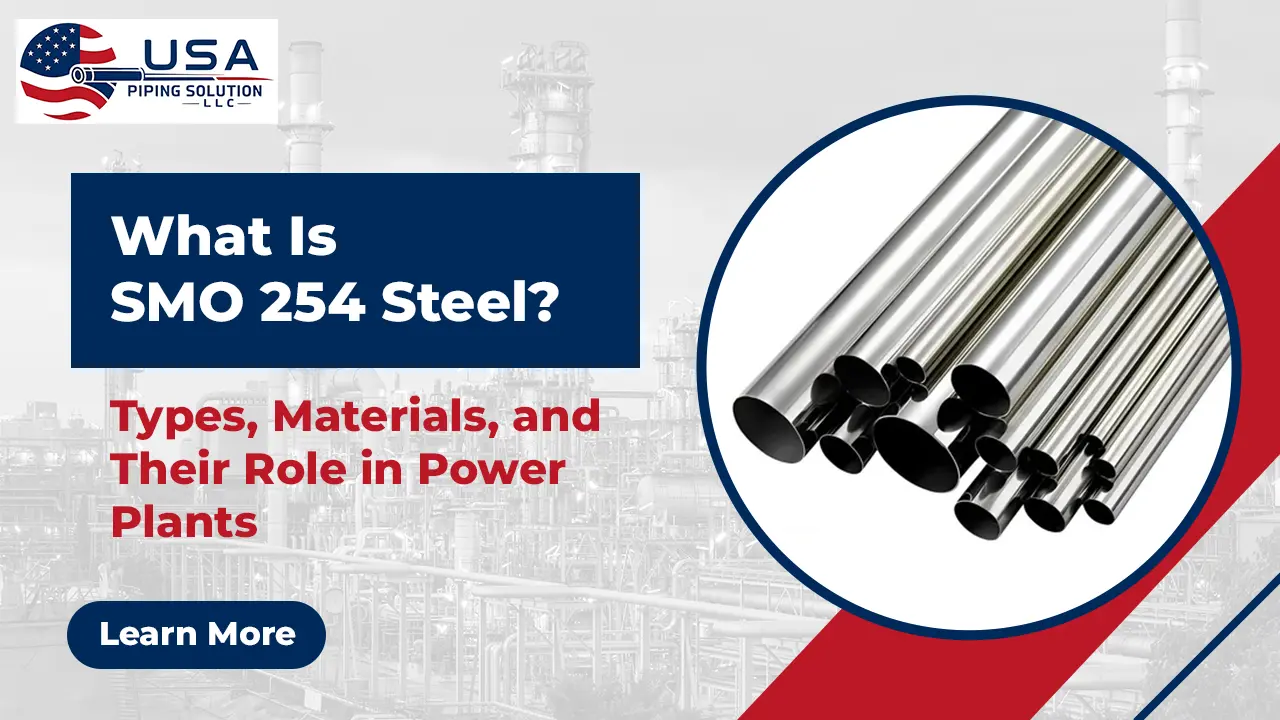
SMO 254 is a type of super austenitic stainless steel or a 6Mo grade that is commonly utilized in environments that are very corrosive. This is a high-pitting and crevice corrosion-resistant, chloride attack resistance alloy that is referred to as UNS S31254 and EN 1.4547 and includes various elements, including molybdenum, chromium, nickel and nitrogen. SMO 254 plates are a high-performance corrosion-resistant alloy; it is specifically crafted to suit the requirements of any demanding application that can not be offered with long term reliability with standard stainless steels.
Chemical Composition of SMO 254
The high-alloy composition of SMO 254 gives it high levels of performance in corrosion resistance in a severe environment. Chromium creates a protective passive coating, and molybdenum (~6%) significantly increases pitting and crevice corrosion resistance under chloride environments. Nitrogen also strengthens, increasing corrosion resistance, which is also a high PREN value, and nickel is beneficial in avoiding stress corrosion cracking. Moreover, copper is compatible with acidic conditions. SMO 254 has a PREN of approximately 42-45, giving it much better resistance to localized corrosion than typical stainless steels.
Why SMO 254 Has Superior Corrosion Resistance
One of the key SMO 254 properties is its excellent resistance to corrosion in chloride-rich environments where standard stainless steels fail. The protective layer of the steel in seawater, brines and chemicals can be destroyed, leading to pitting (small deep holes), and crevice corrosion (damage in gaps and joints). SMO 254 is resistant to this because of the high content of chromium, molybdenum, and nitrogen that enhance the protective coating and slow down the corrosion process. It also exhibits high critical pitting temperature (CPT) implying that it can work well even during high temperatures before corrosion begins. Due to this fact, SMO 254 is stable in seawater, brine, and acid + chloride and therefore can be used in situations where durability and performance over time are critical.
Difference between SMO 254 vs 316L vs 904L
|
Property |
SMO 254 |
904L |
316L |
|---|---|---|---|
|
PREN |
~43 |
~35 |
~25 |
|
Chloride Resistance |
Excellent (Sea water) |
Good |
Limited |
|
Pitting Resistance |
Very High |
High |
Moderate |
|
Acid Resistance |
Strong |
Strong |
Limited |
|
Cost |
High |
Medium |
Low |
Mechanical & Physical Properties of SMO 254
SMO 254 is stronger than normal 300 series stainless steels and can be used in demanding applications. It is also good in ductility, which means it can be easily formed and fabricated without affecting its performance. The alloy is very stable over a large temperature range and therefore can be trusted to operate in low and moderate temperatures. SMO 254 is also non- magnetic that makes it easy to use in magnetic structures and applications.
Applications and Industrial Uses of SMO 254 Steel
- Seawater & Desalination
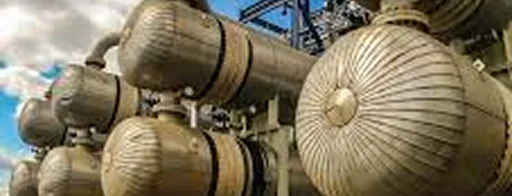
SMO 254 is popular in seawater systems, desalination plants and heat exchangers where chloride levels are high and can easily cause damage to normal stainless steels. It has high pitting and crevice corrosion resistance that guarantees long-term service and minimized maintenance. - Offshore Oil & Gas
SMO 254 is applied in offshore settings in process piping, seawater handling systems and topside equipment that are subjected to harsh marine environments. It aids in sustaining longevity and sustainability of necessary operations. - Chemical Processing
- SMO 254 is widely utilized in reactors, storage tanks, and pipelines with aggressive chemicals, particularly where chlorides and acids are present. It enhances safety and predictability of performance of a process.
- FGD Systems (Power Plants)
- SMO 254 stainless steel plates and sheets commonly used in flue gas desulfurisation systems, where it is used as an absorber and ducting that is subjected to acidic and chloride-rich condensates and offers excellent corrosion resistance in extremely hostile environments.
- Pulp & Paper Industry
SMO 254 is commonly used in bleaching and chemical recovery systems where chemical exposure to chloride is excessive. It improves equipment life and facilitates easy operations under rigorous processing conditions.
Conclusion:
SMO 254 is a high alloy stainless steel that is highly performance-oriented in the most demanding environments. Its more advanced composition provides high resistance to pitting, crevice corrosion, and chloride attack, rendering it one of the most appropriate to use in chloride-intensive environments like seawater systems, chemical processing, and offshore work. In industries where reliability, safety, and long service life are paramount, it is necessary to select the appropriate material. At USA Piping Solution, we are engineering-first to assist you in choosing the best alloy depending on the nature of your operations- to achieve the best performance, durability, and cost-efficiency in your projects.
Frequently Asked Questions
What is SMO 254 steel?
SMO 254 is a high-alloy, super austenitic stainless steel known for excellent corrosion resistance in chloride-rich environments.
Why is SMO 254 better than 316L?
SMO 254 has higher resistance to pitting and crevice corrosion, making it more suitable for harsh chloride and chemical conditions than 316L.
What does UNS S31254 mean?
UNS S31254 is the official material designation for SMO 254 stainless steel.
Where is SMO 254 used?
It is used in seawater systems, offshore oil & gas, chemical processing, and desalination plants.
Is SMO 254 suitable for seawater?
Yes, SMO 254 is highly suitable for seawater applications due to its excellent resistance to chloride corrosion.
Our Blog List
Application Industries
 Boilers
 Heat Exchangers
 Power Plants
 Steam Piping
 Refineries
Drop us a line
We respects customer privacy and ensures absolute confidentiality of any information that is given to us.