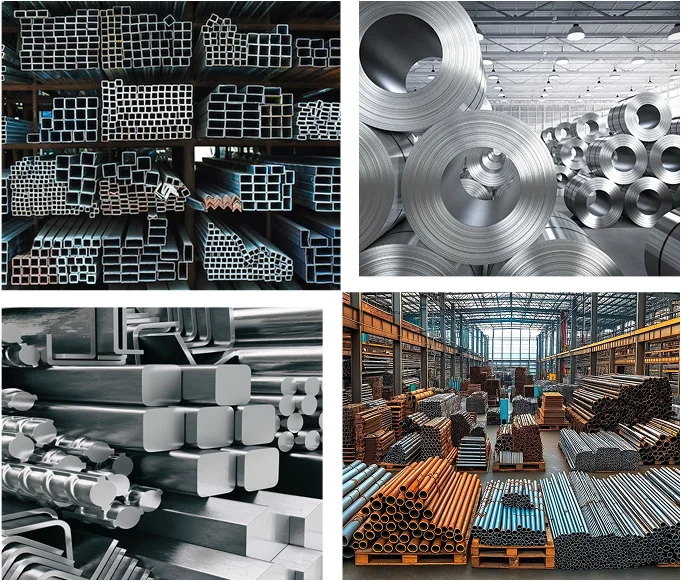
When it comes to tubing that needs to perform reliably under extreme heat and pressure, ASTM A213 / ASME SA213 is the specification the industry turns to. It covers seamless ferritic and austenitic alloy-steel tubes designed specifically for use in boilers, superheaters, and heat exchangers — applications where there’s simply no room for compromise.
These tubes are made seamlessly, either hot-rolled or cold-drawn, giving them a structural advantage over welded alternatives. Their chromium-molybdenum composition — which is why you’ll often hear them called chrome moly tubing — makes them well-suited for the punishing conditions found in power plants, refineries, and petrochemical facilities.
At USA Piping Solutions, we stock ASTM A213 tubing across all the grades our customers commonly need: T2, T5, T9, T11, T22, and T91. Every tube comes with full material certification, and we also offer IBR-compliant and NACE MR0175-compatible options.
What is ASTM A213?
ASTM A213 (ASME SA213) covers minimum-wall-thickness seamless ferritic and austenitic steel tubes for use in boilers, superheaters, and heat exchangers. The specification includes both low-alloy Cr-Mo grades (T-grades) and austenitic stainless grades (TP-grades). These tubes are produced in seamless form only, providing superior mechanical integrity compared to welded alternatives, and are used in the most critical high-temperature sections of thermal power stations and process plants worldwide.
Key characteristics:
- Seamless manufacturing (hot-rolled or cold-drawn)
- Available in alloy steel (T-grades) and stainless steel (TP-grades)
- Designed for high-temperature service (up to 730°C for T91)
- Suitable for hydrostatic and non-destructive electric testing
ASTM A213 Available Grades & Properties
USA Piping Solutions supplies the following alloy steel T-grades under ASTM A213 / ASME SA213:
Grade |
Cr % |
Mo % |
Min. Tensile (MPa) |
Min. Yield (MPa) |
Heat Treatment |
Typical Use |
T2 |
0.50–0.81 |
0.44–0.65 |
415 |
205 |
Anneal / N+T |
Low-alloy boiler tubes |
T5 |
4.00–6.00 |
0.45–0.65 |
415 |
205 |
Anneal / N+T |
High-temp heat exchangers |
T9 |
8.00–10.00 |
0.90–1.10 |
415 |
205 |
Anneal / N+T (>675°C) |
Superheater / boiler |
T11 |
1.00–1.50 |
0.44–0.65 |
415 |
205 |
Anneal / N+T (>650°C) |
Power plant boilers |
T22 |
1.90–2.60 |
0.87–1.13 |
415 |
205 |
Anneal / N+T (>675°C) |
Refineries & power plants |
T23 |
1.90–2.60 |
0.05–0.30 |
510 |
400 |
N+T |
Ultra-supercritical boilers |
T91 |
8.00–9.50 |
0.85–1.05 |
585 |
415 |
N+T (>1040°C / >730°C) |
Extreme temp service |
ASME SA213 Standard Dimensions & Tolerances
Parameter |
Range / Specification |
Outside Diameter |
1/8″ (3.2 mm) ID to 5″ (127 mm) OD; larger OD available on request |
Wall Thickness |
0.015″–0.500″ (0.4–12.7 mm) minimum or average wall |
Length |
10 ft, 20 ft, 40 ft, or customised |
Wall Thickness Tolerance (cold-formed) |
+/- 10% of specified average wall thickness |
Manufacturing Process |
Hot-rolled seamless or cold-drawn seamless |
Required Tests & Inspections of ASTM A213
All ASTM A213 tubing is subject to the following mandatory quality checks:
- Chemical composition inspection
- Tensile strength, yield strength & elongation tests
- Flaring test – one from each end of a finished tube per lot
- Flattening test – one from each end of a separate finished tube per lot
- Hardness test (max. Rockwell B85 for most alloy grades)
- Bend test
- Hydrostatic test or non-destructive electric test (manufacturer’s option unless specified)
ASTM A213 Tubing Heat Treatment Requirements
Heat treatment must be carried out separately from, and in addition to, heating for hot forming:
- T9, T22: Full anneal, isothermal anneal, or normalize and temper (tempering above 675°C)
- T11: Full anneal, isothermal anneal, or normalize and temper (tempering above 650°C)
- T91: Normalize above 1040°C and temper above 730°C
Applications & Industries of ASTM A213 Tubes
- Power Generation: Boiler tubes, superheater tubes, reheater tubes, steam lines
- Oil & Gas: Heat exchanger coils, process heaters, refinery tubing
- Petrochemical: High-temp heat exchangers, reactor feed/effluent systems
- Industrial: Pressure vessels, condensers, high-temperature fluid transfer
Related & Referenced Standards
- ASME SA213 – Boiler & Pressure Vessel Code equivalent
- ASTM A1016 / A1016M – General requirements for tubes
- ASTM A370 – Standard test methods for mechanical testing of steel
- ASTM E213 – Ultrasonic examination of metal pipe and tubing
- ASTM E309 – Eddy-current examination of steel tubular products
- EN 10216-2 – European seamless alloy steel tube standard (equivalent grades)
Why Source ASTM A213 Tubing from USA Piping Solutions?
- Full range of alloy grades: T2, T5, T9, T11, T22, T23, T91
- IBR-certified material available
- NACE MR 0175 compliant supply
- Mill Test Certificates (EN 10204.3)
- Custom OD, wall thickness, and length on request
- Packed in bundles or ply wooden box for seaworthy delivery
Frequently Asked Questions – ASTM A213 Tubing
What is ASTM A213 tubing used for?
ASTM A213 tubing is used for boilers, superheaters, and heat exchangers in power plants, refineries, and petrochemical facilities that require high-temperature and high-pressure performance.
What grades does ASTM A213 cover?
Common alloy grades under ASTM A213 include T2, T5, T9, T11, T12, T22, T23, and T91. Stainless grades such as TP304, TP316, and TP321 are also covered.
What is the difference between ASTM A213 and ASTM A335?
ASTM A213 covers seamless tubes (smaller diameters, used in heat exchangers and boilers), while ASTM A335 covers seamless pipes (larger sizes, used in piping systems). Both use chrome moly alloy grades with similar Cr-Mo chemistry.
What is the size range for ASTM A213 tubing?
ASTM A213 tubing is typically furnished from 1/8″ inside diameter to 5″ outside diameter, with wall thicknesses from 0.015″ to 0.500″.