
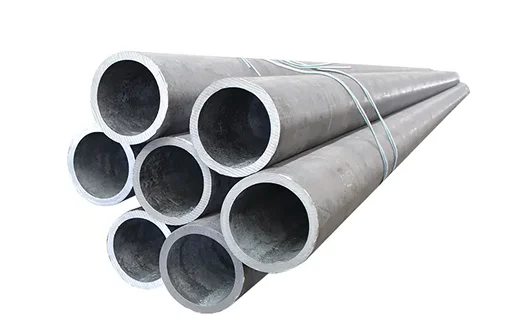
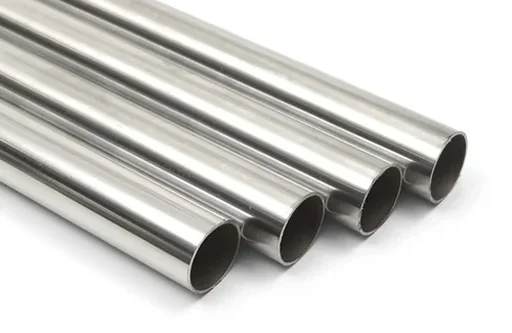
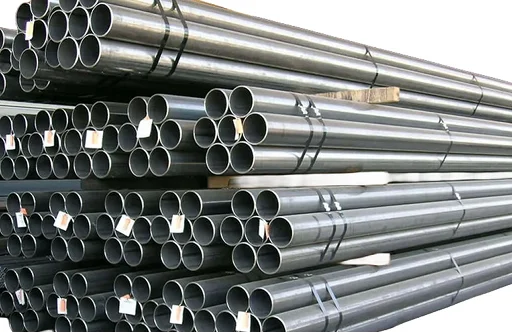
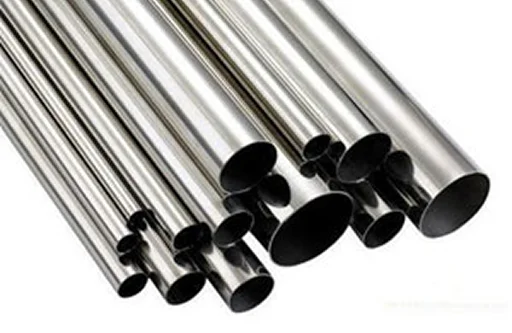
If your application involves high heat, high pressure, or both, ASTM A335 / ASME SA335 is likely the specification you're working with. These seamless ferritic alloy-steel pipes commonly called Chrome-Moly or Cr-Mo pipes are built specifically for demanding high-temperature service in power plants, refineries, and petrochemical facilities.
At USA Piping Solution, we stock and supply all major P-grades P5, P9, P11, P22, P91, and P92 backed by full mill certifications so your procurement and inspection teams have everything they need from day one.
| Standard | ASTM A335 / ASME SA335 |
|---|---|
| Type | Seamless Ferritic Alloy Steel Pipe |
| Also Known As | Chrome-Moly Pipe, Cr-Mo Pipe, P-Grade Pipe |
| Grades Available | P1, P2, P5, P5b, P9, P11, P12, P22, P91, P92 |
| Size Range | ½" NPS to 30" NPS (16mm to 1016mm OD) |
| Wall Thickness | SCH 20, 30, STD, 40, 60, 80, 100, 120, 160, XXS |
| Length | 6m, 12m, or custom cut |
| Max Service Temp | Up to 750°C (grade-dependent) |
| Certifications | EN 10204 3.1/3.2, IBR, NACE MR0175, PED |
Request a Free Quote
What is ASTM A335 / ASME SA335?
ASTM A335 is the standard specification for seamless ferritic alloy-steel pipe intended for high-temperature service. The ASME equivalent designation is SA335, used under the ASME Boiler & Pressure Vessel Code (BPVC). Both designations cover the same material with identical chemical and mechanical requirements.
The specification covers both nominal wall and minimum wall chrome-molybdenum (Cr-Mo) alloy steel pipes. Pipes ordered to this specification shall be suitable for bending, flanging (vanstoning), and similar forming operations, and for fusion welding. Molybdenum (Mo) improves tensile strength, creep resistance, elastic limit, wear resistance, hardenability, and resistance to softening at elevated temperatures. It also restrains grain growth and slows embrittlement. Chromium (Cr) improves oxidation and corrosion resistance. Above 12% Cr content, the material is classified as stainless steel. In A335 grades, Cr content ranges from 0% (P1) to 9.5% (P91/P92), providing excellent sulfidation and high-temperature oxidation resistance.
ASTM A335 pipes can also be used to manufacture pipe fittings per ASTM A234 (e.g., WP11, WP22, WP91) and flanges per ASTM A182 (e.g., F11, F22, F91).
Key Characteristics of ASTM A335 Pipe
- Seamless manufacturing — no weld seam, superior pressure integrity
- Hot finished or cold drawn process
- Heat treated: full annealed, isothermal annealed, or normalized & tempered
- Suitable for fusion welding and forming operations
- High creep rupture strength at elevated temperatures
- Resistant to hydrogen sulfide (H₂S) corrosion — NACE compliant grades available
- Resistant to hydrogen attack and embrittlement
- Resistant to hot sulfide corrosion cracking
- Suitable for NACE MR0175 sour service
- Ideal for creep rupture applications
- Hydrostatic and non-destructive examination (NDE) tested
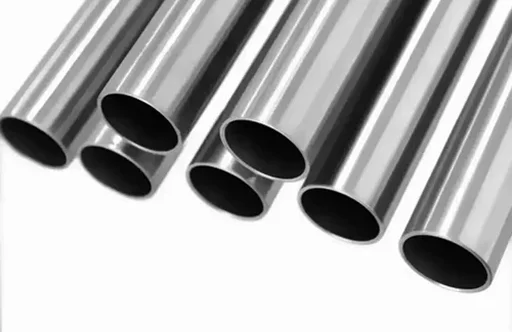
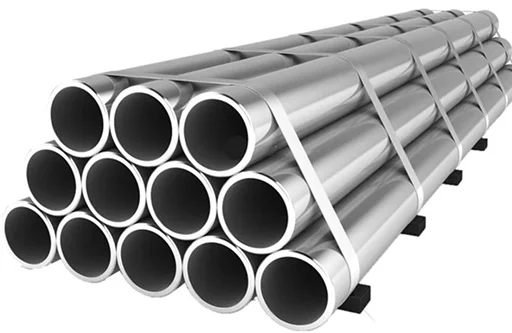
ASTM A335 Grades
ASTM A335 Mechanical Properties
All values below are minimum specified requirements per ASTM A335 / ASME SA335.
| Grade | UNS No. | Tensile Strength (MPa) min. | Yield Strength (MPa) min. | Elongation (%) min. | Hardness (HBW) max. |
|---|---|---|---|---|---|
| P1 | K11522 | 380 | 205 | 30 | 163 |
| P5 | K41545 | 415 | 205 | 30 | 163 |
| P5b | K51545 | 415 | 205 | 30 | 163 |
| P9 | S50400 | 415 | 205 | 30 | 217 |
| P11 | K11597 | 415 | 205 | 30 | 163 |
| P12 | K11562 | 415 | 220 | 30 | 163 |
| P22 | K21590 | 415 | 205 | 30 | 163 |
| P91 | K90901 | 585 | 415 | 20 | 250 |
| P92 | K92460 | 620 | 440 | 20 | 250 |
ASTM A335 Chemical Composition
Chemical composition in weight percent (%). All values are maximum unless a range is specified.
| Grade | C % | Mn % | P % max | S % max | Si % | Cr % | Mo % |
|---|---|---|---|---|---|---|---|
| P1 | 0.10–0.20 | 0.30–0.80 | 0.025 | 0.025 | 0.10–0.50 | — | 0.44–0.65 |
| P5 | 0.15 max | 0.30–0.60 | 0.025 | 0.025 | 0.50 max | 4.00–6.00 | 0.45–0.65 |
| P9 | 0.15 max | 0.30–0.60 | 0.025 | 0.025 | 0.25–1.00 | 8.00–10.00 | 0.90–1.10 |
| P11 | 0.05–0.15 | 0.30–0.60 | 0.025 | 0.025 | 0.50–1.00 | 1.00–1.50 | 0.44–0.65 |
| P22 | 0.05–0.15 | 0.30–0.60 | 0.025 | 0.025 | 0.50 max | 1.90–2.60 | 0.87–1.13 |
| P91 | 0.08–0.12 | 0.30–0.60 | 0.020 | 0.010 | 0.20–0.50 | 8.00–9.50 | 0.85–1.05 |
| P92 | 0.07–0.13 | 0.30–0.60 | 0.020 | 0.010 | 0.50 max | 8.50–9.50 | 0.30–0.60 |
Note: P91 also contains V: 0.18–0.25%, Nb: 0.06–0.10%, N: 0.030–0.070%, Ni: ≤0.40%, Al: ≤0.04%. P92 also contains W: 1.5–2.0%, B: 0.001–0.006%, V: 0.15–0.25%, Nb: 0.04–0.09%.
ASTM A335 Pipe Dimensions & Size Range
All dimensions per ASME B36.10M. Pipes available in hot finished seamless (HFS) and cold drawn seamless (CDS) forms.
| Parameter | Range / Options |
|---|---|
| Outside Diameter (OD) | 1/2" NPS to 30" NPS / 16mm to 1016mm |
| Wall Thickness | SCH 20, 30, STD, 40, 60, XS (80), 100, 120, 140, 160, XXS |
| Wall Thickness (mm) | 2mm to 120mm |
| Length | 6 meters, 12 meters, or custom cut-to-length |
| Manufacturing Process | Hot Finished Seamless (HFS) / Cold Drawn Seamless (CDS) |
| End Finish | Plain End (PE), Beveled End (BE), Threaded End (TE), with/without Coupling |
| Surface Treatment | Oiled, Black painted, Varnished, 3PE, FBE coated, Polished |
ASTM A335 Pipe Applications & Industries
ASTM A335 chrome-moly alloy steel pipes are used across the most demanding high-temperature and high-pressure industrial environments:
- Power Generation: Superheater and reheater tubes, high-pressure steam headers, interconnecting piping in coal, gas, and oil-fired power plants, ultra-supercritical (USC) and advanced ultra-supercritical (A-USC) power plants
- Oil & Gas Refineries: Catalytic crackers, hydrocracker units, hydrogen reformers, sulfur recovery units, crude distillation units
- Petrochemical Plants: High-temperature process piping, ethylene crackers, chemical reactors
- Boiler Manufacturing: High-pressure boilers, IBR-certified boiler tubes and headers
- Heat Exchangers: Tubular heat exchangers, shell and tube configurations for elevated-temperature service
- Gas Processing: Gas dehydration units, acid gas treatment, high-pressure gas transmission lines
- Pressure Vessels: High-pressure vessels in hydrogen and sour gas service
- High-Temperature Steam Lines: Main steam lines, hot reheat lines, extraction steam piping
Heat Treatment Requirements
All ASTM A335 pipes (except P5c, P23, P91, P92, P122, and P911) shall be reheated and furnished in one of the following conditions:
- Full annealed
- Isothermal annealed
- Normalized and tempered
Minimum tempering temperatures:
- Grades P5, P5b, P9, P21, P22: 675°C (1250°F)
- Grades P1, P2, P11, P12, P15: 650°C (1200°F)
- Grade P91: Normalized at ≥1040°C, tempered at ≥730°C
- Grade P92: Normalized at ≥1040°C, tempered at ≥730°C
- Grade P23: Normalized at ≥1040°C (air or accelerated cooling), tempered at ≥730°C
Note: It is recommended that the tempering temperature be at least 50°C (100°F) above the intended service temperature. Inform the manufacturer if service temperature exceeds 600°C (1100°F).
Testing & Inspection Requirements
Each pipe manufactured to ASTM A335 is subject to the following tests:
- Hydrostatic Test — every length of pipe
- Tensile Test — transverse or longitudinal (per heat)
- Flattening Test — per ASTM A999
- Hardness Test (Brinell) — per ASTM A92
- Bend Test — where applicable
- Ultrasonic Examination (UT) — per ASTM E213
- Eddy Current Examination — per ASTM E309
- Flux Leakage Examination — per ASTM E570
- Chemical Analysis — per heat
Frequently Asked Questions — ASTM A335 Pipes
What is the difference between ASTM A335 and ASME SA335?
ASTM A335 and ASME SA335 are technically equivalent. ASTM A335 is the ASTM International designation, while SA335 is the ASME Boiler & Pressure Vessel Code designation. Both have identical chemical and mechanical requirements. The same pipe satisfies both standards.
What does "ASTM A335 material" refer to?
ASTM A335 material refers to seamless ferritic chrome-moly alloy steel pipe made to the ASTM A335 standard. It is characterized by the presence of chromium and molybdenum, which provide high-temperature strength, creep resistance, and oxidation resistance. Available in multiple P-grades (P1 through P92), each with a specific Cr-Mo ratio for different service temperatures.
Which ASTM A335 grade should I select?
Grade selection depends on design temperature and process environment. Below 425°C, carbon steel is sufficient. For 425–510°C, use P11. For 510–565°C or hydrogen-rich environments, use P22. Above 565°C, or where thinner walls are required, use P91 or P92. For sulfur-bearing refinery service, P5 or P9 are preferred for their higher Cr content and sulfidation resistance.
Can ASTM A335 pipes be welded?
Yes. All A335 grades are specified as suitable for fusion welding. Higher grades (P91, P92) require controlled welding procedures (WPS/PQR), pre-heat, and mandatory post-weld heat treatment (PWHT). Compatible filler materials per ASME IX or equivalent are required. Mixing dissimilar grades in the same joint is discouraged without special WPS and buttering layers.
What is the matching fitting and flange material for ASTM A335?
For pipe fittings (elbows, tees, reducers): ASTM A234 — WP5, WP9, WP11, WP22, WP91. For flanges and forged fittings: ASTM A182 — F5, F9, F11, F22, F91. Always match the alloy grade to avoid differential thermal expansion issues.
What certifications are provided with ASTM A335 pipes?
USA Piping Solution provides: EN 10204 3.1 and 3.2 Mill Test Certificates, IBR (Indian Boiler Regulation) certificates, NACE MR0175 / MR0103 compliance, PED compliance, and third-party inspection reports from SGS, Bureau Veritas, TÜV, or Lloyd's Register on request.
What is the difference between Grade P91 and P22?
P91 (9Cr-1Mo-V) is a creep-strength-enhanced ferritic (CSEF) steel that allows approximately 50% thinner walls than P22 (2.25Cr-1Mo) at equivalent temperatures. P91 is used in ultra-supercritical power plants (above 565°C), while P22 is the workhorse for conventional power generation. P91 also contains Vanadium and Niobium for additional strengthening.
Related Products
- Alloy Steel Pipes & Tubes
- Alloy Steel Seamless Pipes & Tubes
- ASTM A335 P91 Pipes
- ASTM A335 P9 Pipes
- ASTM A335 P11 Pipes
- ASTM A335 P22 Pipes
- ASTM A335 P5 Pipes
- ASTM A335 P1 Pipes
- ASTM A335 P2 Pipes
Get a Quote for ASTM A335 Pipes
Send us your grade, size, quantity, and certification requirements and receive a competitive quote within 24 hours.
Request a Free Quote